H Post Anchor vs U-Shaped Post Support: Which Do You Need?

Pick an H post anchor when the post holds up something heavy or tall: a carport, a pergola corner, a deck frame or a gate post. Its long blade goes 400 to 800 mm into the concrete and the post bolts through a steel web, so the joint stays stiff. Pick a U-shaped post support for ordinary fence posts, screens and light garden structures, where a 300 mm anchor in a modest footing is plenty and the lower price adds up across a long fence line. Both keep the timber clear of the concrete, so both beat setting bare wood in the ground.
We stock both, and the question we get most is simply "which shape for which post?" Here's how we answer it.
H Post Anchor vs U-Shaped Post Support at a Glance
| H post anchor | U-shaped post support (concrete-in) | |
|---|---|---|
| Shape | Two flanges joined by a central web; the lower half is cast in, the upper half grips the post | U-shaped saddle on a single ribbed anchor |
| Depth in concrete | 400, 600 or 800 mm | 300 mm |
| Steel thickness | 4, 5 or 6 mm | 4 mm |
| Post sizes we stock | 71 to 141 mm | 71 to 151 mm |
| Typical jobs | Carports, pergolas, decks, gate posts, canopies | Fence posts, screens, trellis, light pergolas |
| Footing | Deeper hole, more concrete | Standard fence post footing |
| Our price per piece | €5.95 to €15.39 | €4.89 to €6.59 |
What an H Post Anchor Is and When It Earns Its Price
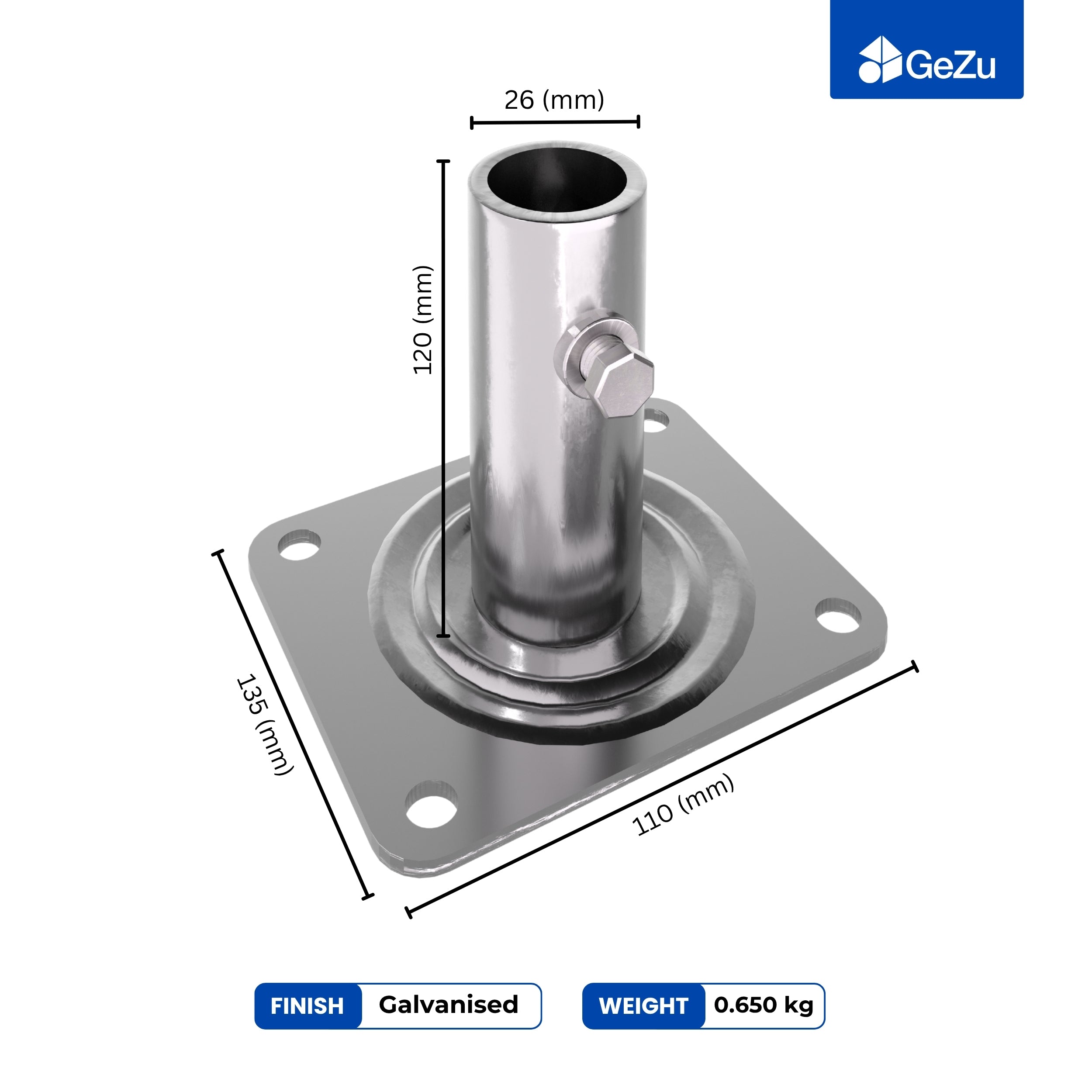
An H post anchor is a steel section shaped like the letter H on its side: two flanges joined by a web. You cast the lower part into a concrete footing, stand the timber post in the open top between the flanges and bolt straight through both flanges and the post. The post sits on the web, above the concrete, so rainwater can drain away from the end grain instead of pooling against it.

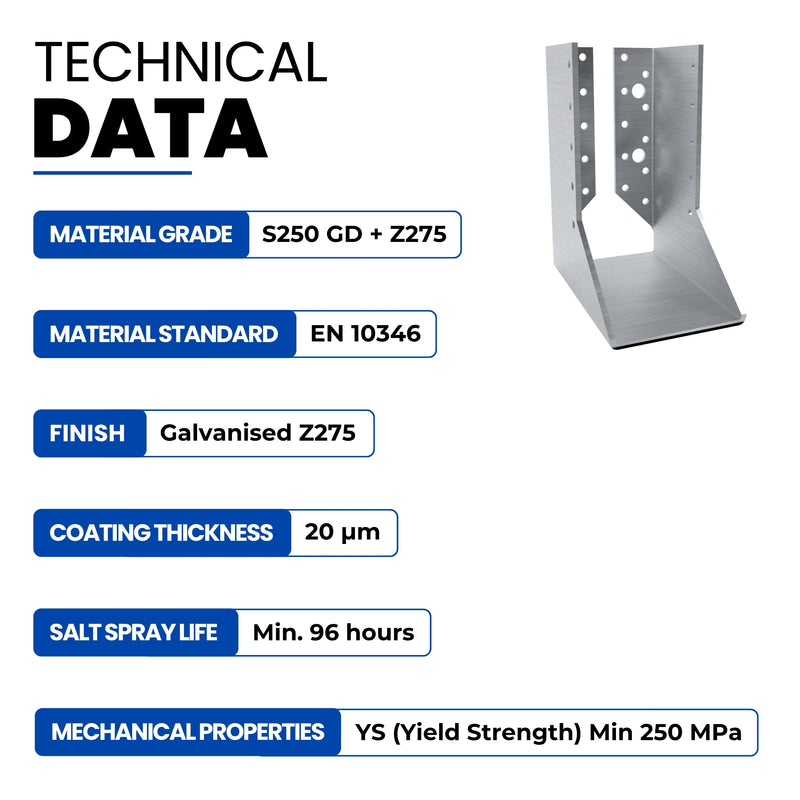
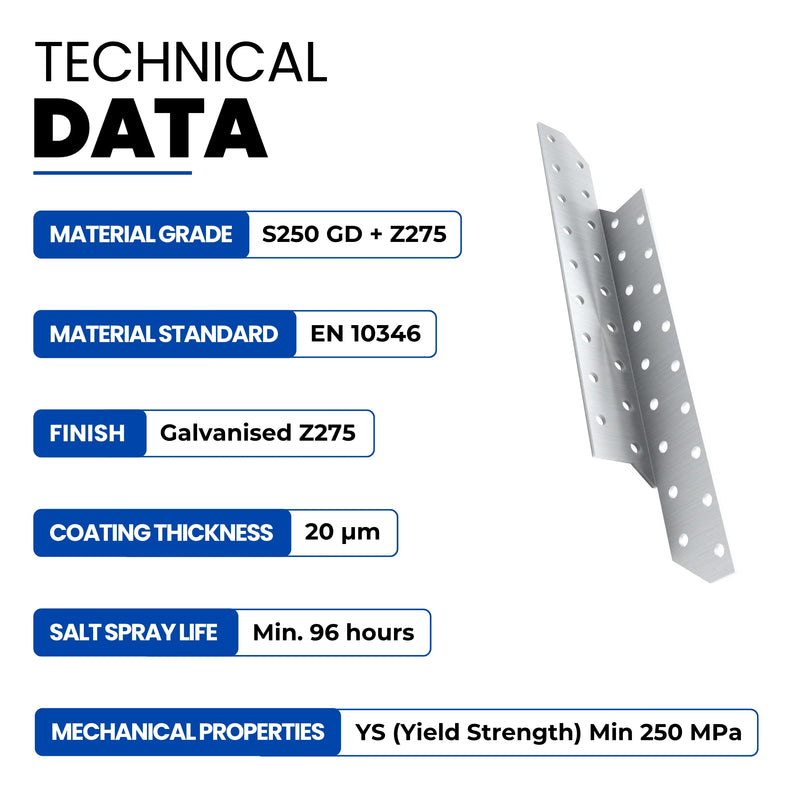
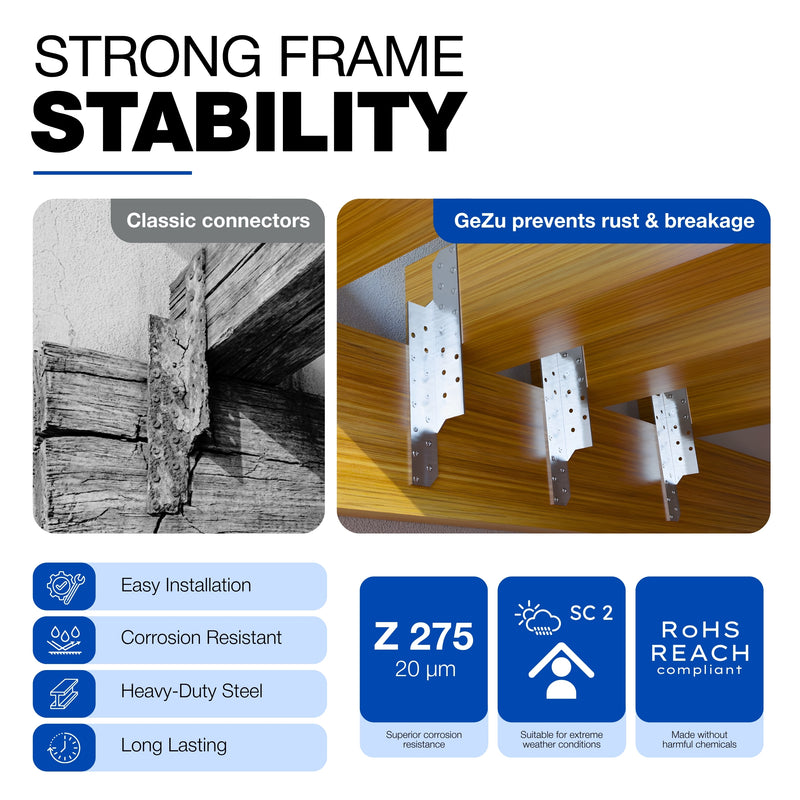
Our hot-dip galvanised H post anchor comes in post widths from 71 to 141 mm and in three embed depths: 400 mm with 4 mm steel, 600 mm with 5 mm steel and 800 mm with 6 mm steel. Prices run from €5.95 for the smallest to €15.39 for a 141 mm anchor at 800 mm. Hot-dip galvanising means the steel was dipped in molten zinc, which leaves the matte grey finish that survives years of wet ground.
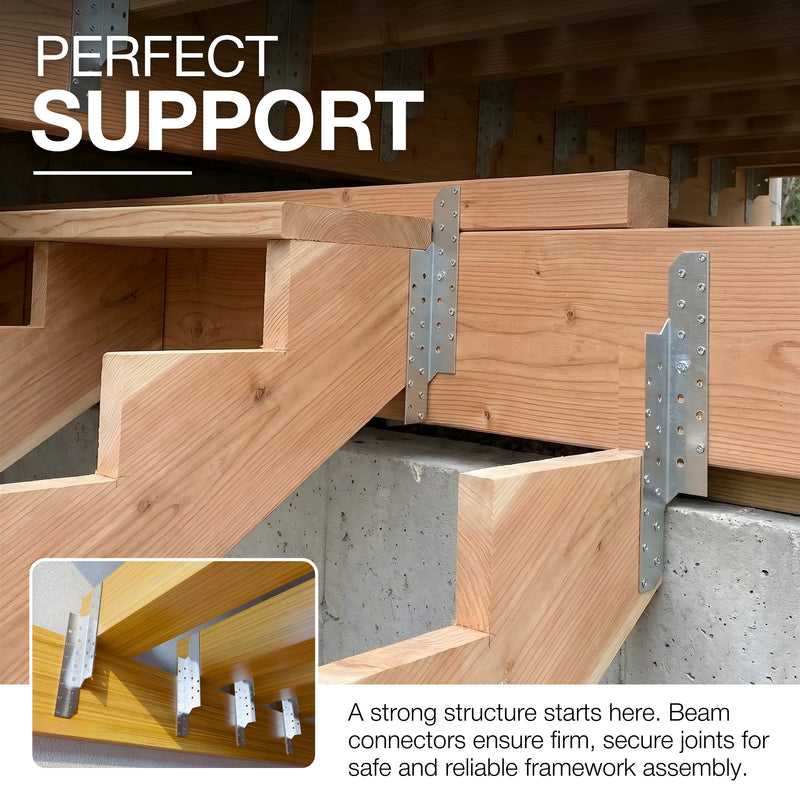
What it's for: anything where the post carries a roof, a frame or a swinging load. A carport post takes wind uplift on the roof sheet. A pergola corner takes racking every time the wind catches the slats. A gate post gets twisted dozens of times a day. In all three, the deep blade and the through-bolted flanges resist the post rocking in its footing far better than a short anchor can.
The benefits in plain terms: a longer lever arm locked in concrete, two flanges to bolt through instead of one fixing point, and a choice of depth so you can match the anchor to the load rather than guessing.
What a U-Shaped Post Support Is and Why Most Fences Use One
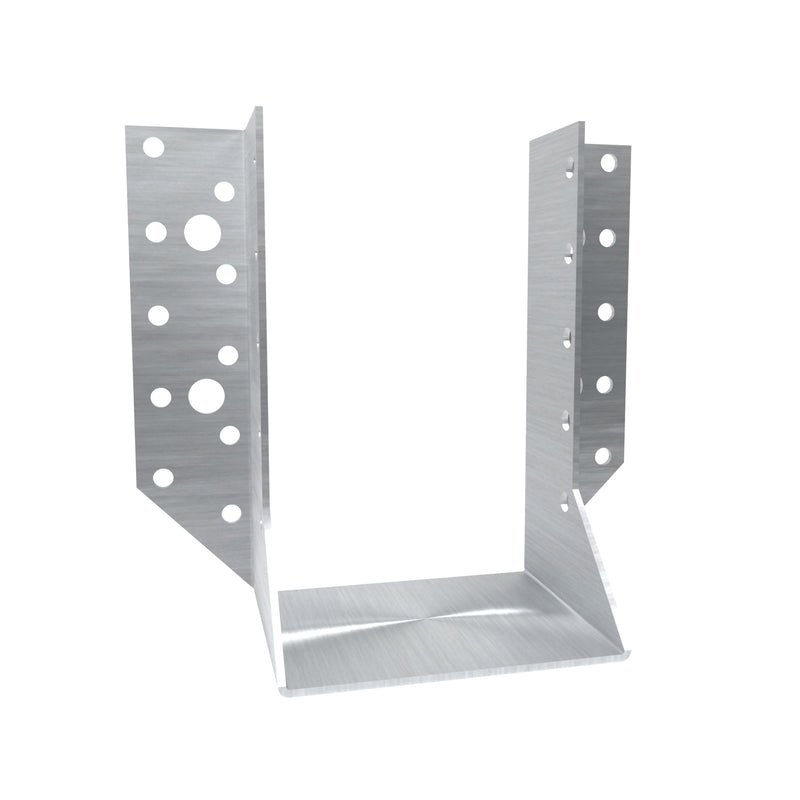
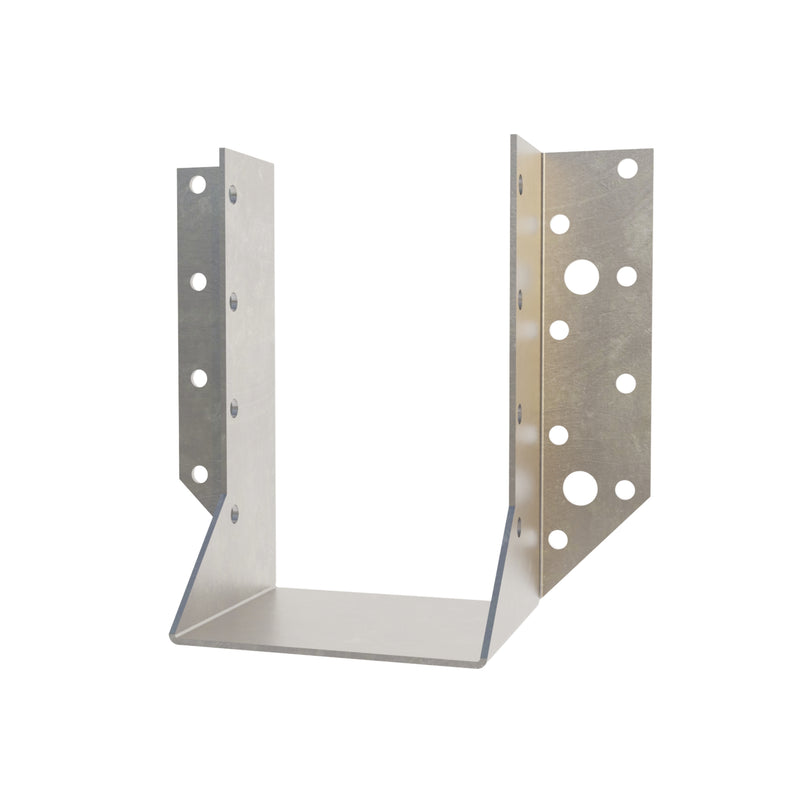
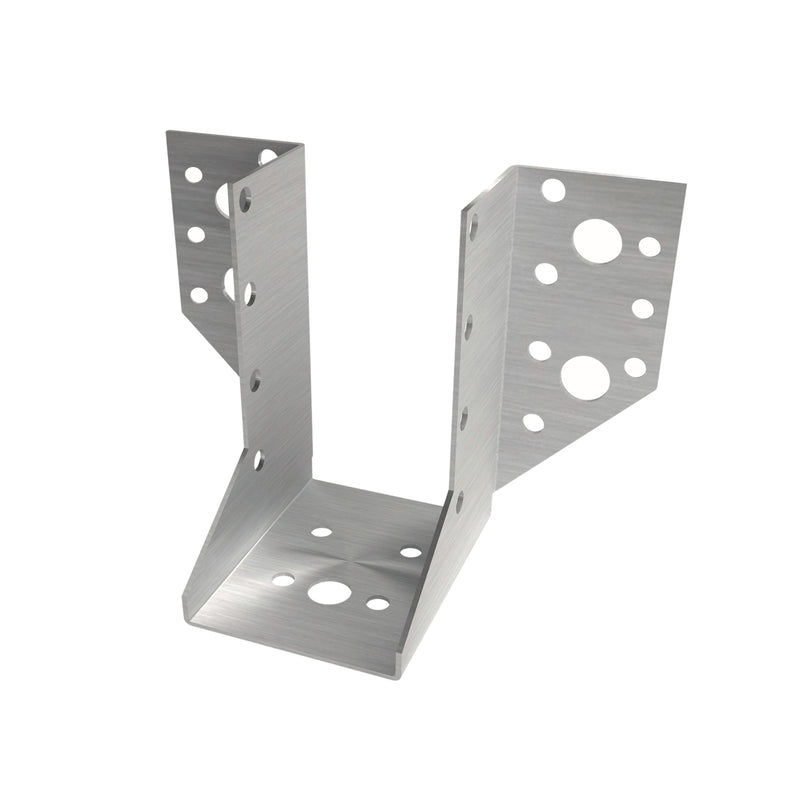
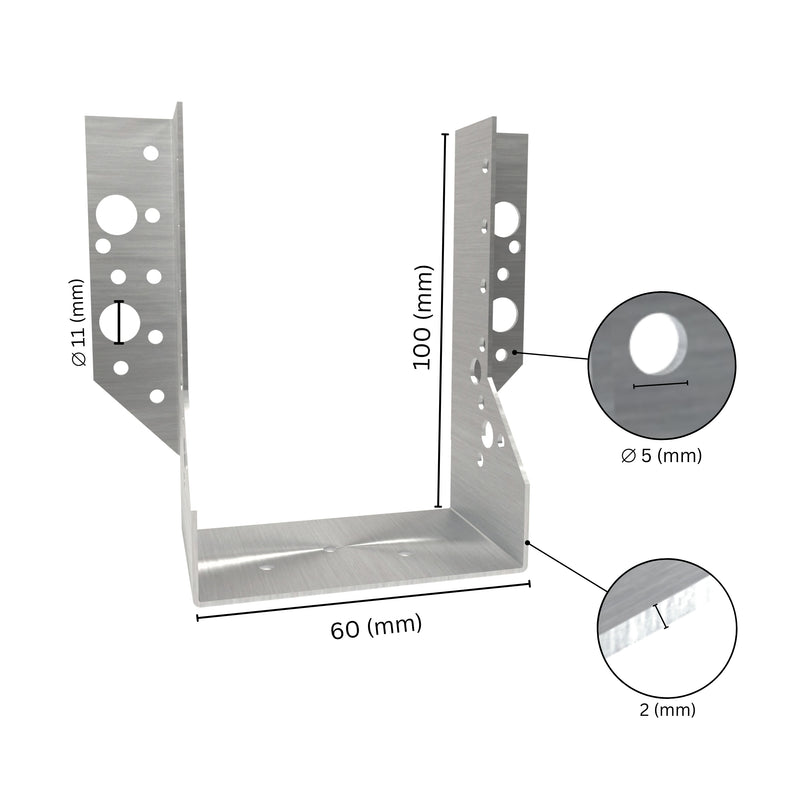
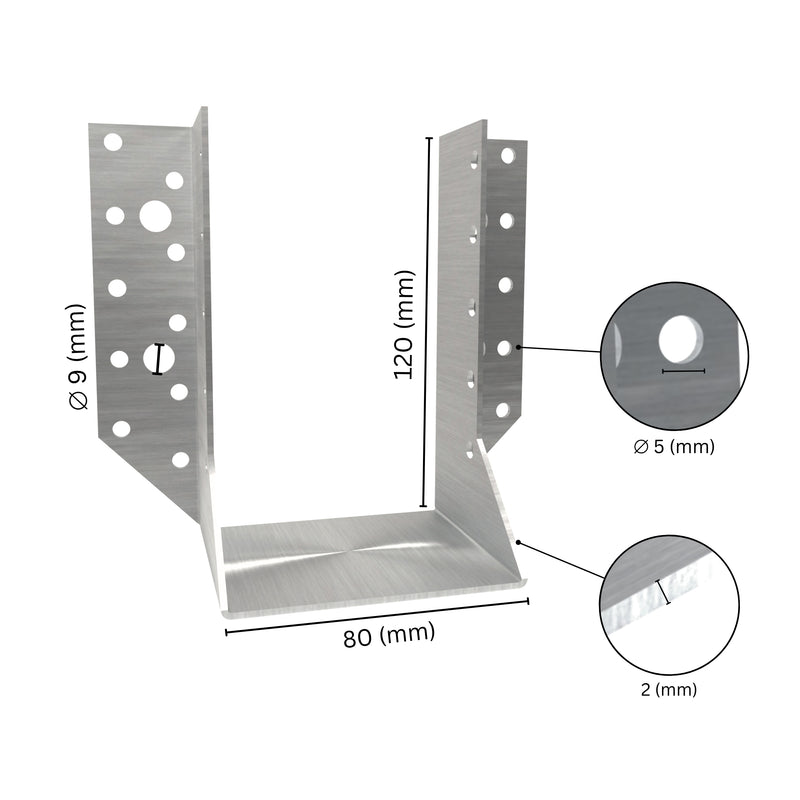
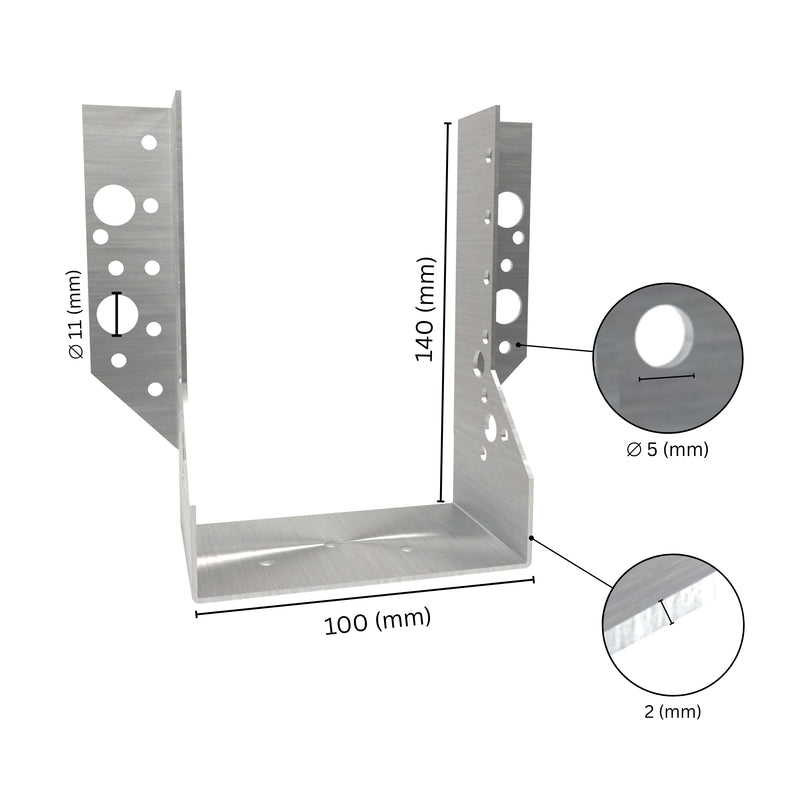
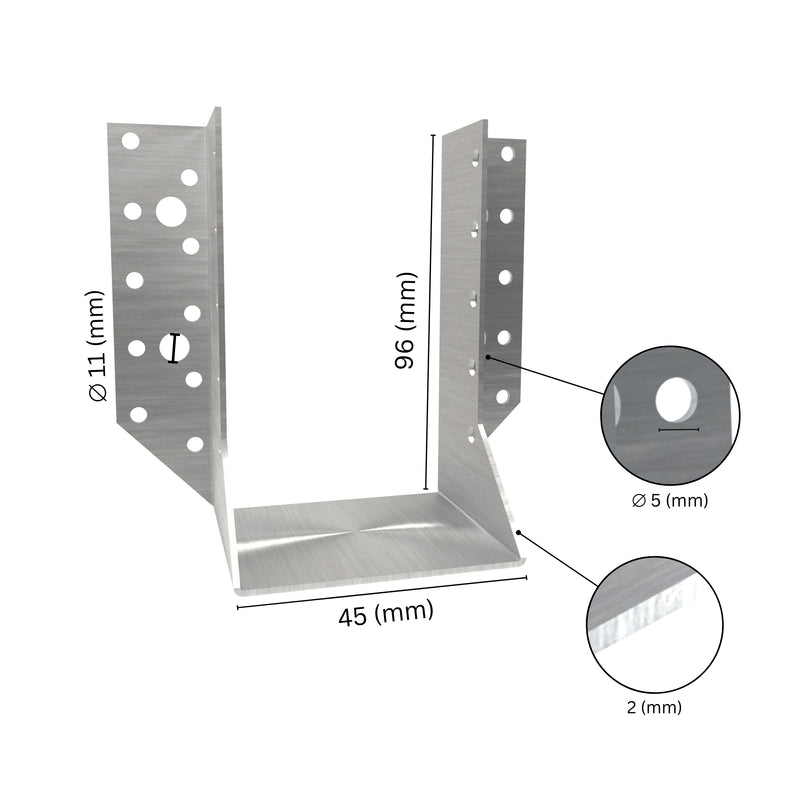
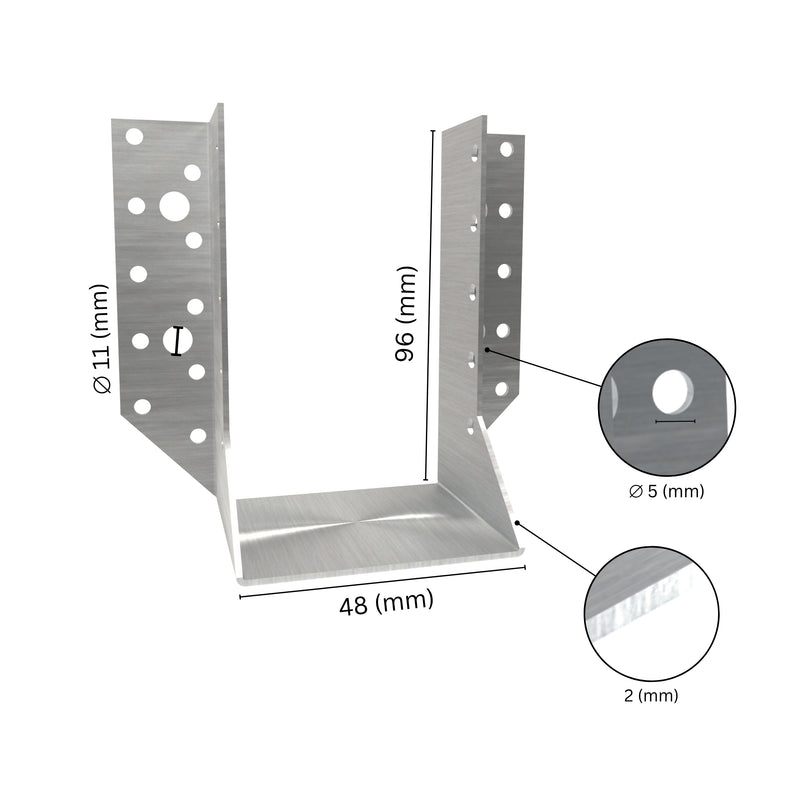
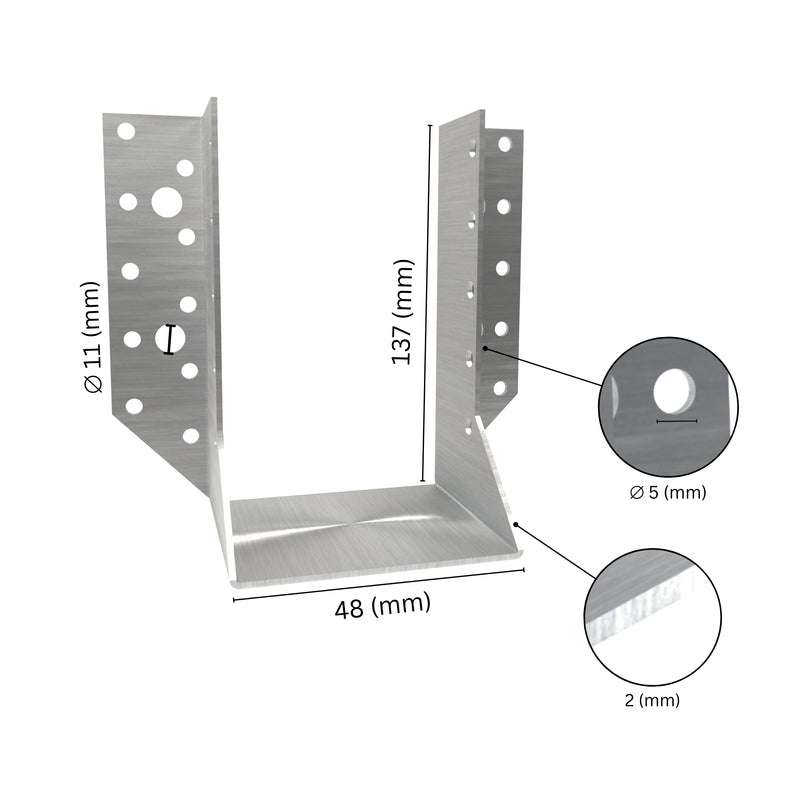
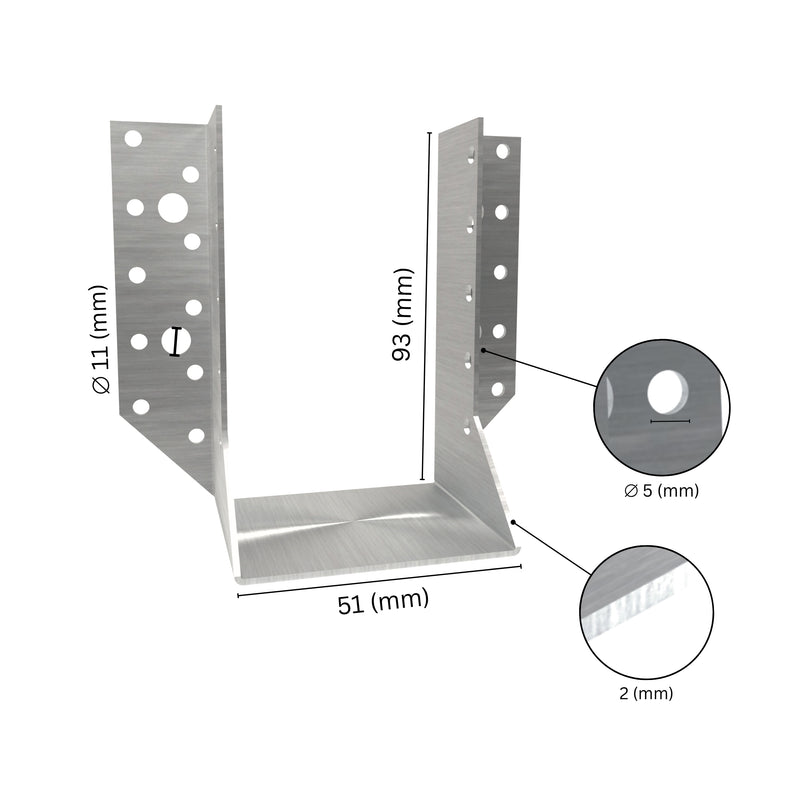
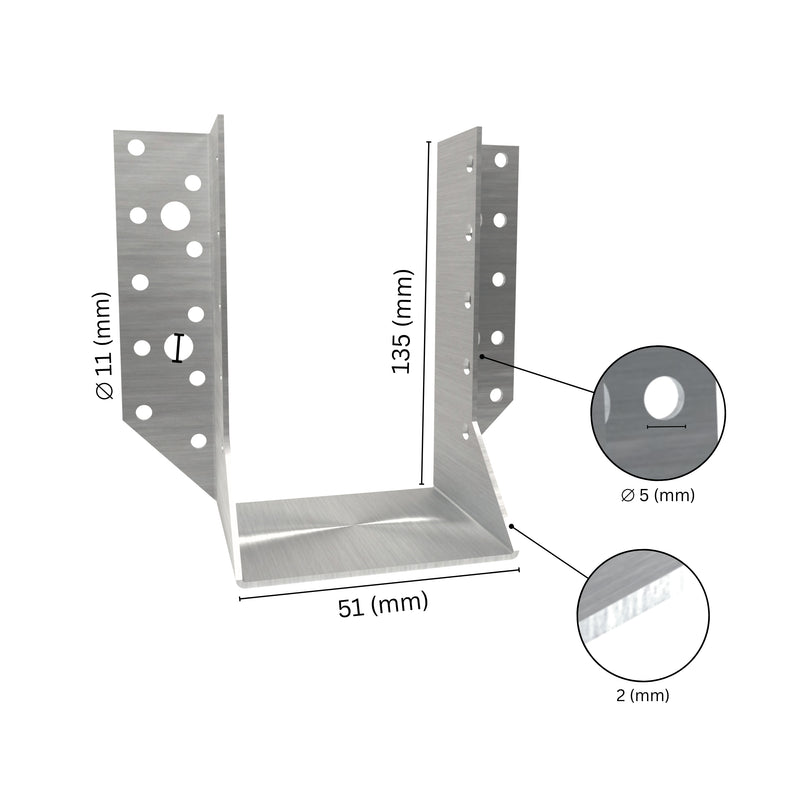
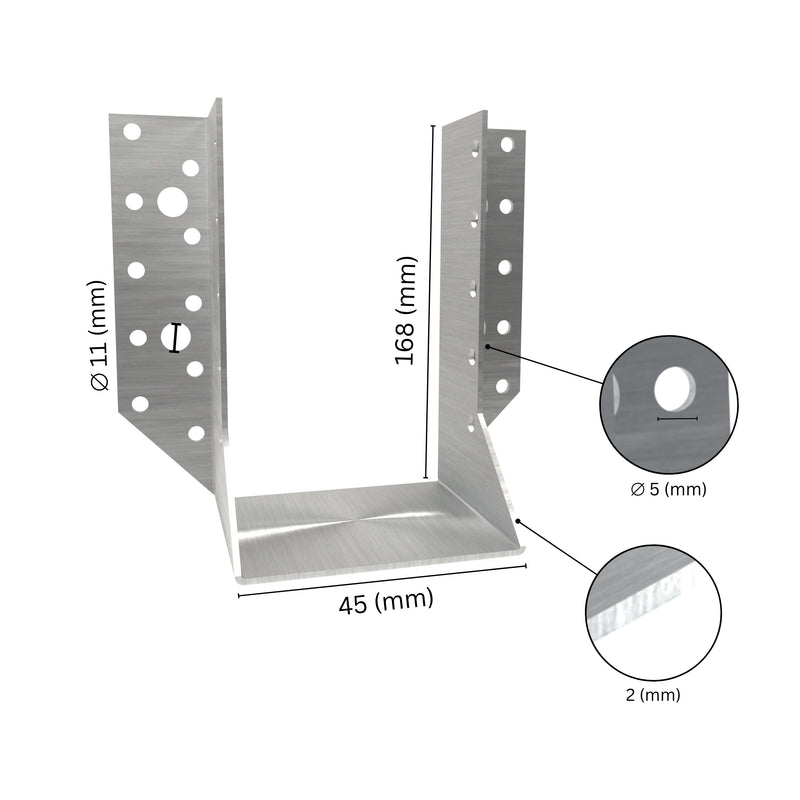
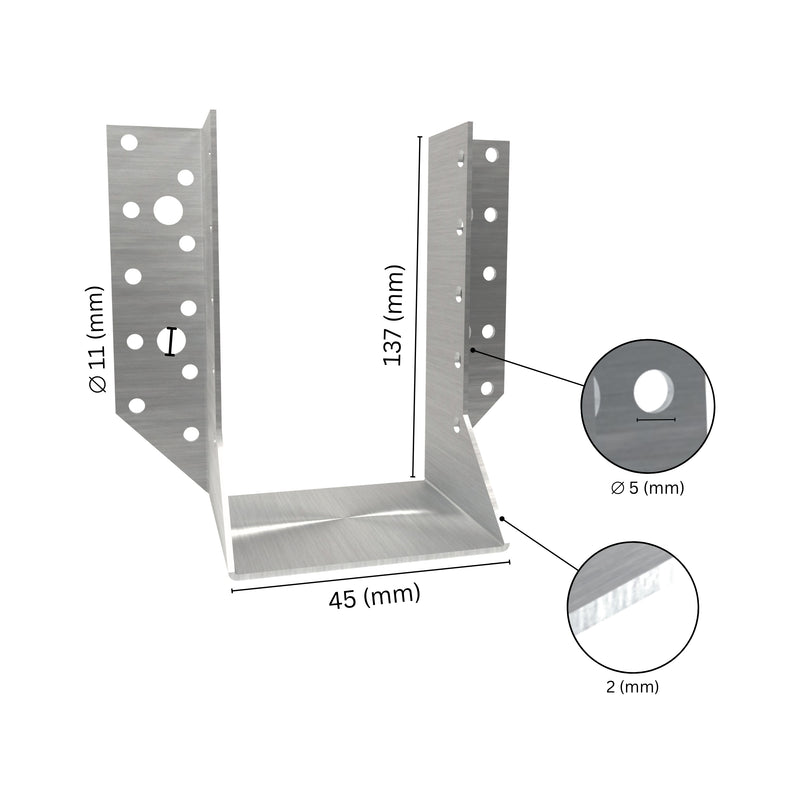
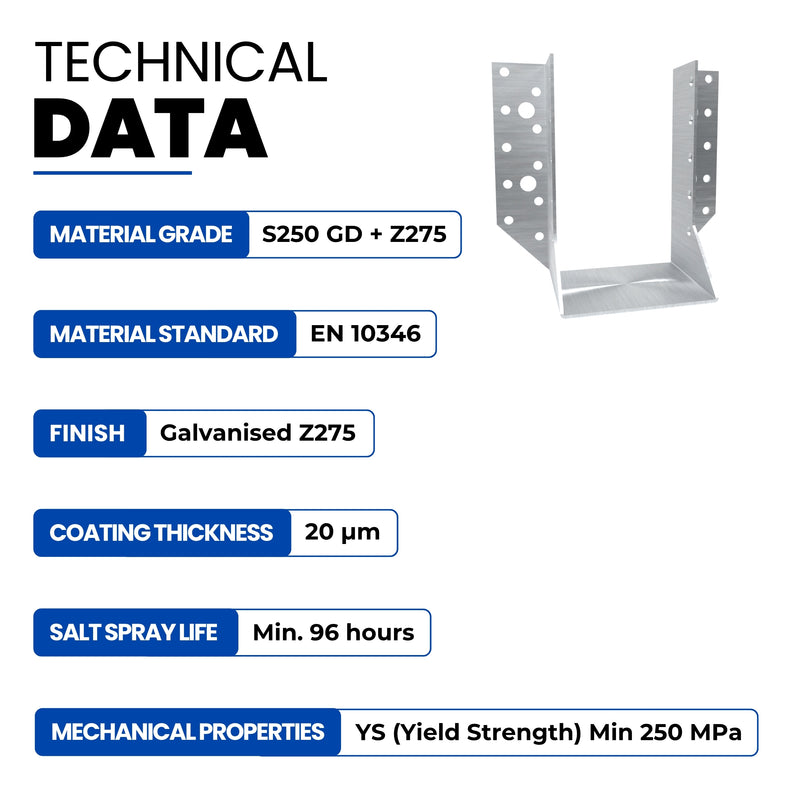
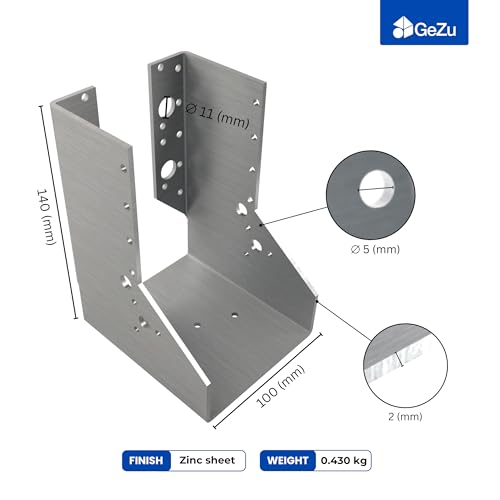
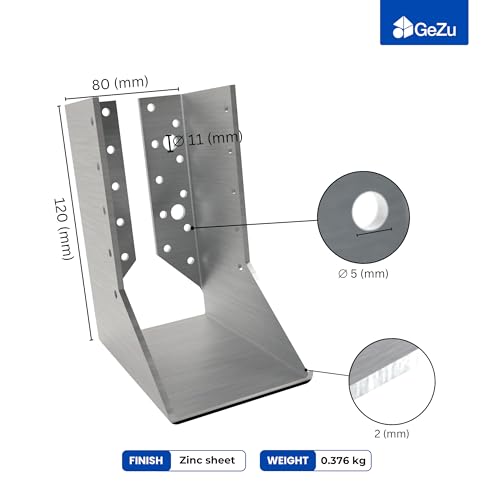
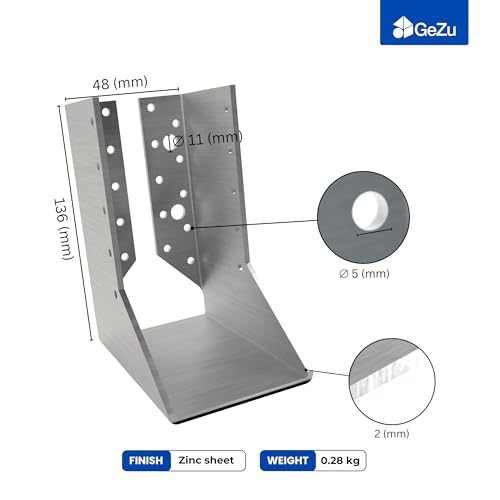
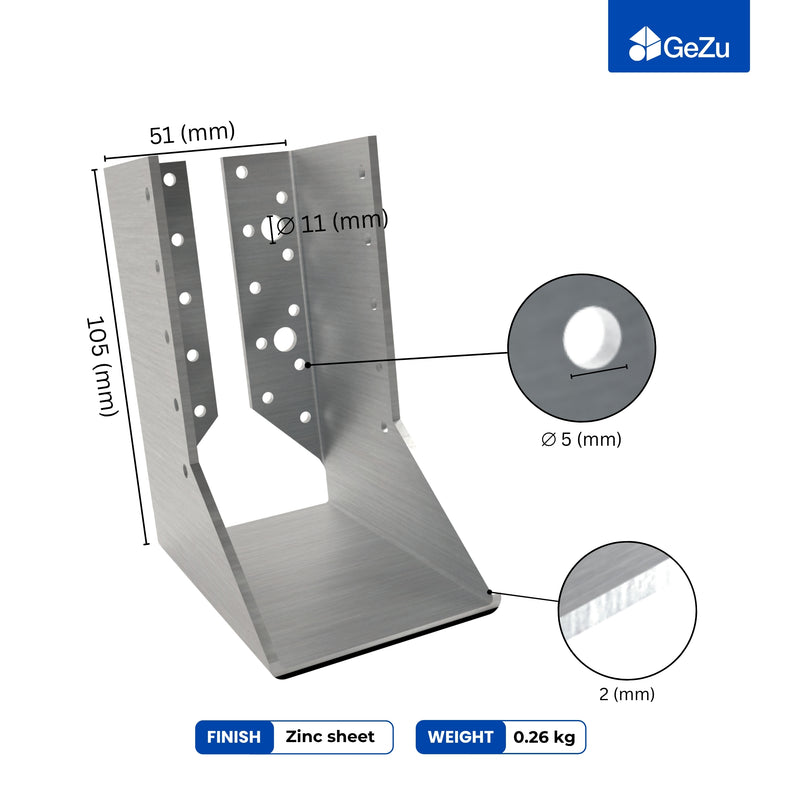
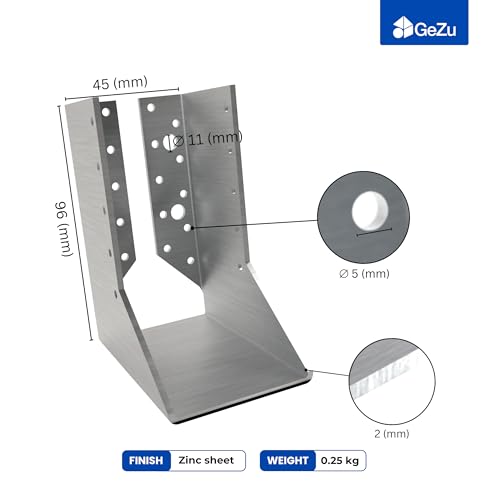
A U-shaped post support is a U-shaped saddle welded to a ribbed anchor. The anchor goes into a wet concrete footing, the post drops into the U, and you bolt through the two legs. Like the H anchor, it holds the timber a couple of centimetres clear of the concrete.

Our concrete-in U-shaped post support uses 4 mm hot-dip galvanised steel on a 300 mm anchor, in post widths from 71 to 151 mm, at €4.89 to €6.59 each. That price gap matters on a fence: across twenty posts, choosing U supports over deep H anchors can save more than the cost of the concrete.
What it's for: garden fence lines, privacy screens, trellis, log stores, bin stores and light pergolas. The 300 mm anchor fits comfortably inside a normal fence post footing, so you dig no deeper than you would anyway. If you're unsure how deep that footing should be, our guide on setting fence posts to the right depth covers it by fence height.
Already have a slab or patio rather than soil? The same U shape comes with a base plate. Our bolt-down U post support with adjustable width fixes to existing concrete with anchors, no digging. We compare that route with casting in, in detail, in bolt-down versus concrete-in U supports.
Which Is Stronger, an H Anchor or a U Support?
For the same post size, the H post anchor gives the stiffer joint. Two things drive that. First, embed depth: 600 or 800 mm of steel in concrete resists leverage far better than 300 mm. Second, the bolted connection: the post is clamped between two full-height flanges, so it can't pivot on a single bolt line as easily.
We won't quote a load figure, because the honest answer is that the footing usually fails before the bracket does. A strong anchor in a shallow, narrow footing in soft ground will still lean. So size the hole and concrete properly whichever shape you choose; our postcrete bag calculator per post turns hole size into a bag count.
Which Shape for Which Post: A Quick Decision Guide
- Fence post, panels up to about 1.8 m, sheltered site: U-shaped post support.
- Fence post on an exposed, windy site with solid panels: U support in a generous footing, or step up to a 400 mm H anchor at ends and corners.
- Gate post: H post anchor, 600 mm.
- Pergola or carport corner post: H post anchor, 600 or 800 mm depending on post height and roof area.
- Deck support posts: H post anchor sized to the post.
- Existing patio or slab: bolt-down U support, no casting needed.
Mixing shapes along one job is normal. Plenty of fence lines run U supports on the intermediate posts and H anchors on the gate and corner posts, which is where the loads concentrate.
How to Install Either One in Concrete
The steps are almost identical; only the hole depth changes.
- Set out the line. Run a string line and mark post centres to suit your panel or beam spacing.
- Dig the hole. Make it about three times the post width across, and deep enough to bury the full anchor plus a gravel base. For an 800 mm H anchor that's a proper hole, so plan your digging.
- Add gravel. 100 to 150 mm of compacted gravel at the bottom helps drainage.
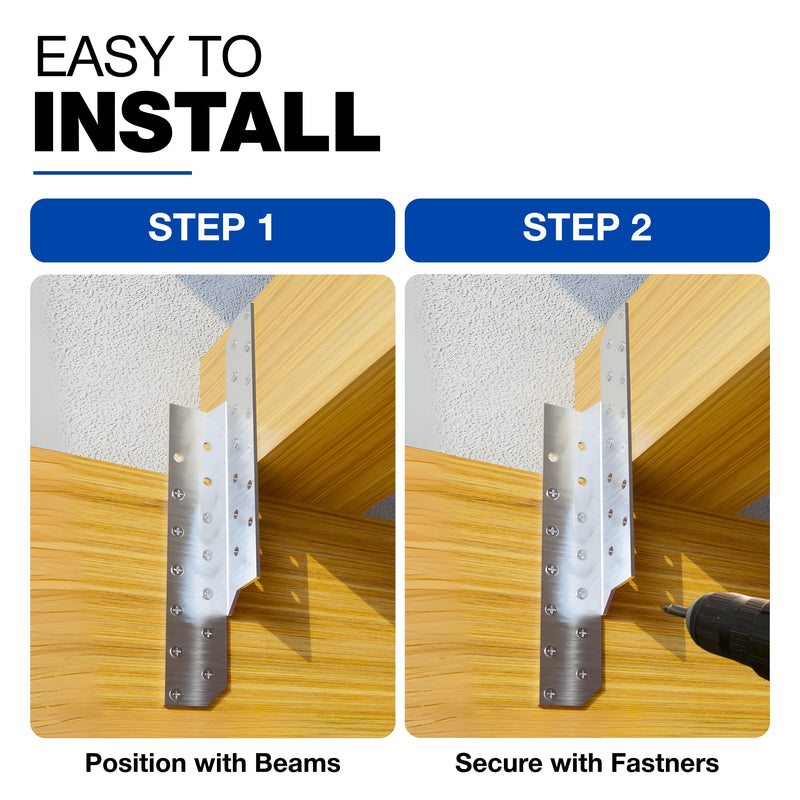
- Position the bracket. Stand it on the gravel and fill around it with concrete or post mix. Keep the saddle or flange top a few centimetres above finished ground.
- Check plumb and alignment. Use a level on two faces and sight along the string before the mix stiffens. Bracing the bracket with offcuts helps.
- Let it cure. Wait at least a day before bolting heavy posts or hanging panels; longer for carports and gates.
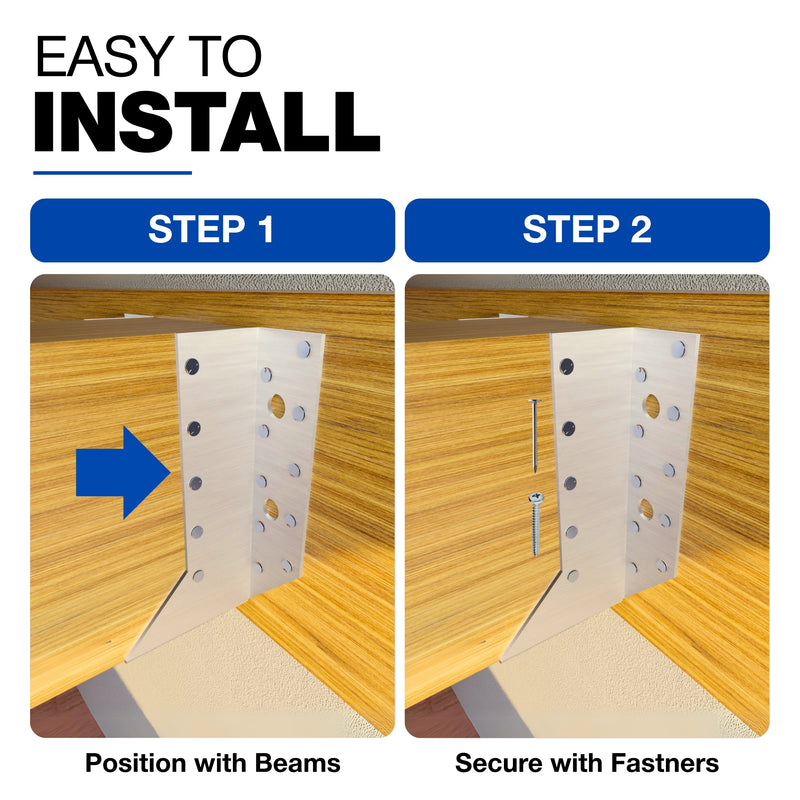
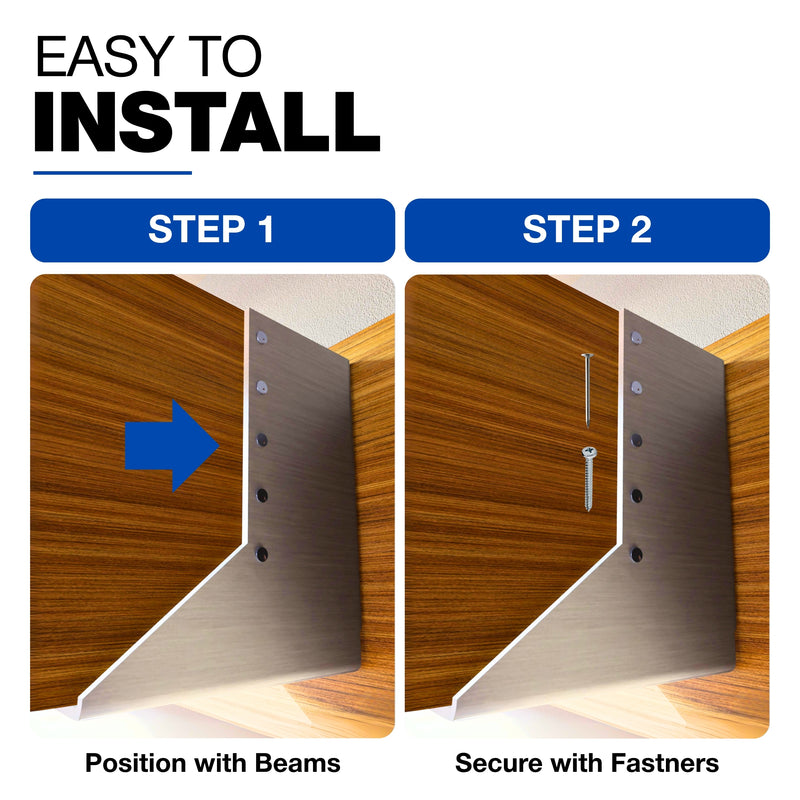
- Fit and bolt the post. Drill through using the bracket holes as a guide, then fit coach bolts or threaded bar with washers and nuts.
In cold months, think about frost. A footing that sits too shallow in frost-prone soil can lift, bracket and all. We explain the mechanism and the fixes in our article on frost heave and fence posts.
Common Mistakes With Post Anchors
- Burying the timber. The whole point of both brackets is that the wood stays above the concrete. Don't let the mix rise into the saddle.
- Using an H anchor in a fence-sized hole. An 800 mm blade needs an 800 mm footing plus base. A deep anchor in a shallow hole is no better than a short one.
- Undersized bolts. Fill the holes with bolts that match them. Screws alone won't hold a gate or a carport post.
- Wrong width. Measure the actual post, not the nominal size. A 100 mm post is often 95 to 98 mm; pick the bracket that leaves the least play and pack any small gap.
FAQs
What Is an H Post Anchor Used For?
An H post anchor fixes a timber post into a concrete footing for heavy or tall structures such as carports, pergolas, decks, canopies and gate posts. The deep blade and two bolted flanges give a stiffer joint than a short fence bracket.
Can You Use a U Post Support for a Pergola?
Yes, for a light, freestanding pergola in a sheltered spot. For a pergola with a solid roof, a large footprint or an exposed site, use H post anchors on at least the corner posts.
How Deep Should an H Post Anchor Go Into Concrete?
Bury the full cast-in part of the anchor, with the post-holding section above ground. Choose the anchor length by load: 400 mm for light work, 600 mm for gates and most pergolas, 800 mm for tall posts and carports. Always follow local building rules for structures that need them.
Do U Post Supports Stop Fence Posts Rotting?
They help a lot. By holding the post above the concrete and the soil, a U support keeps the end grain out of standing water, which is where buried posts usually rot first.
Our Recommendation
Use U-shaped post supports for fence lines and light structures, and save H post anchors for the posts that carry a roof, a frame or a gate. That puts the extra steel where the load is and keeps the rest of the budget sensible. You'll find both shapes, plus spikes and bolt-down bases, in our post support range. If you're torn between a cast-in bracket and a driven spike, our spike versus concrete-in comparison is the next read.