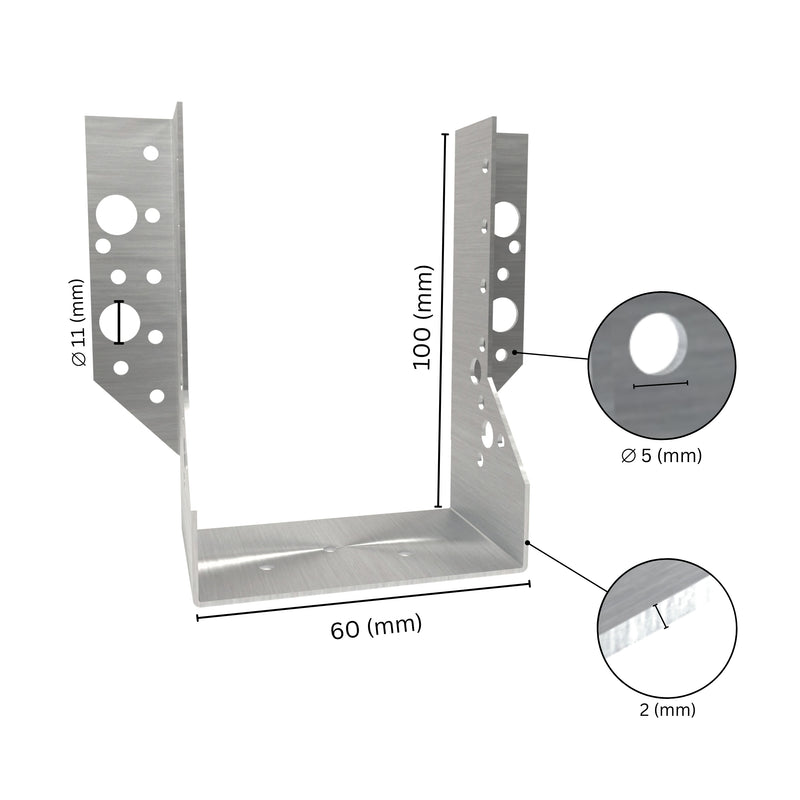
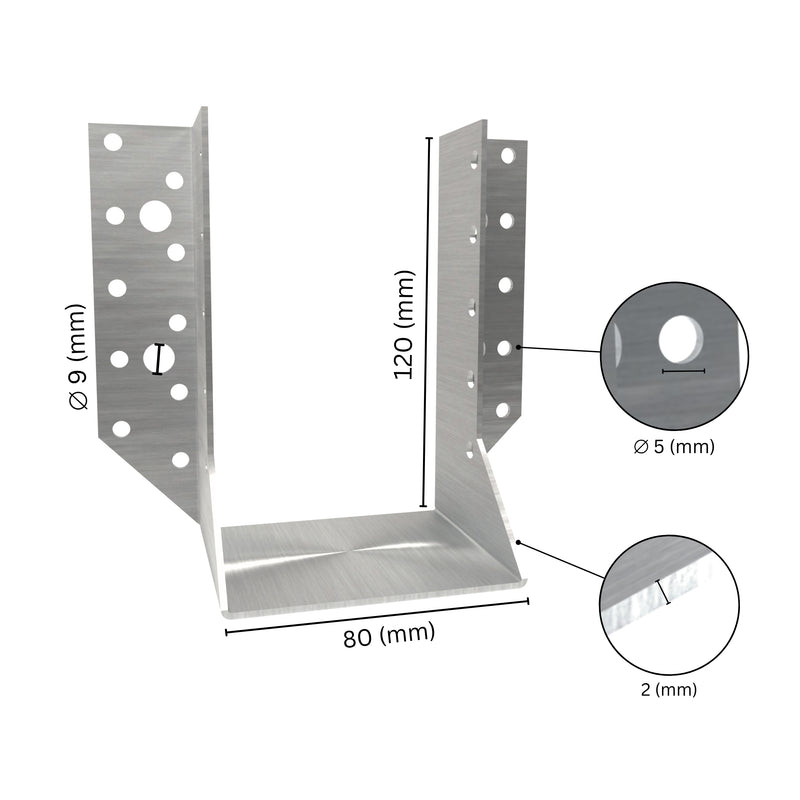
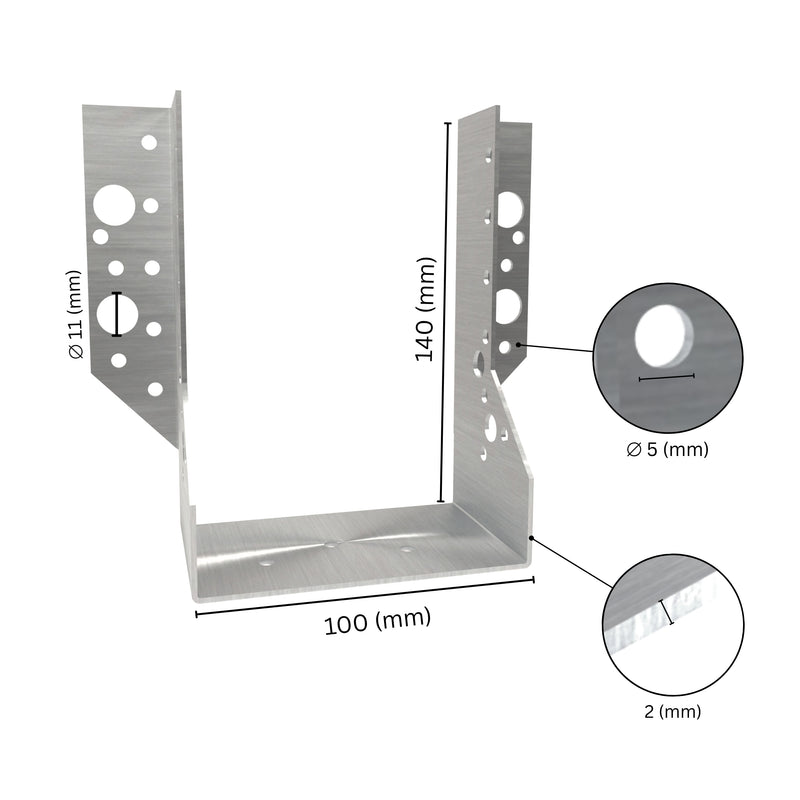
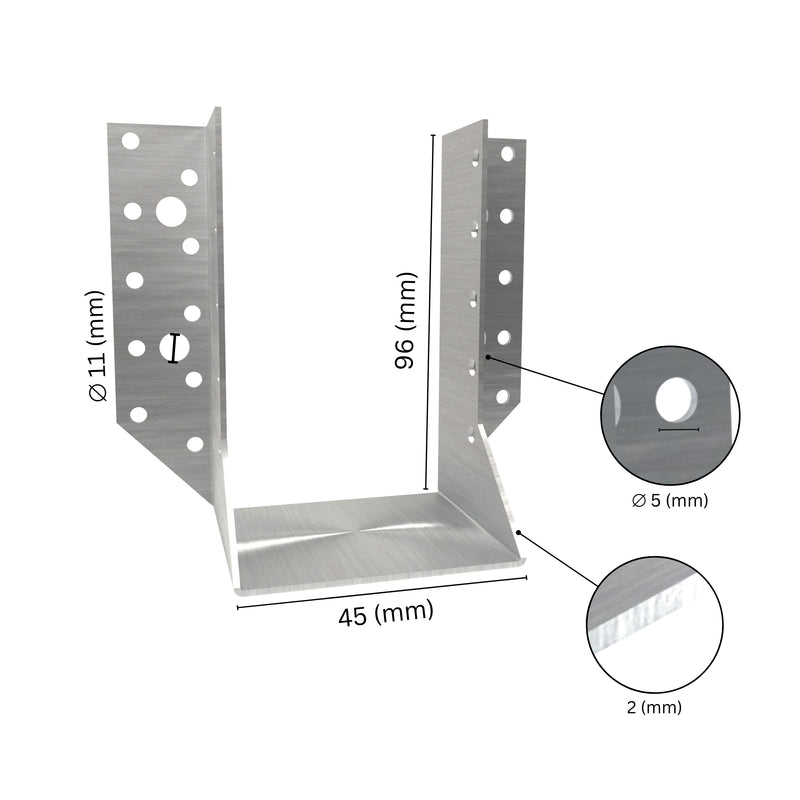
Types of Fence Brackets: Which One Your Fence Actually Needs

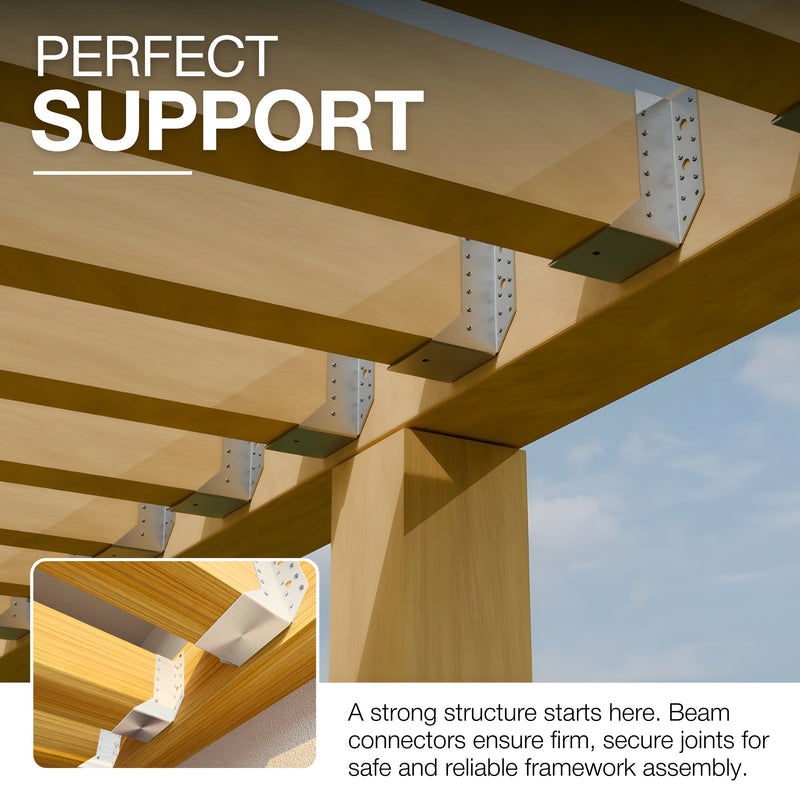
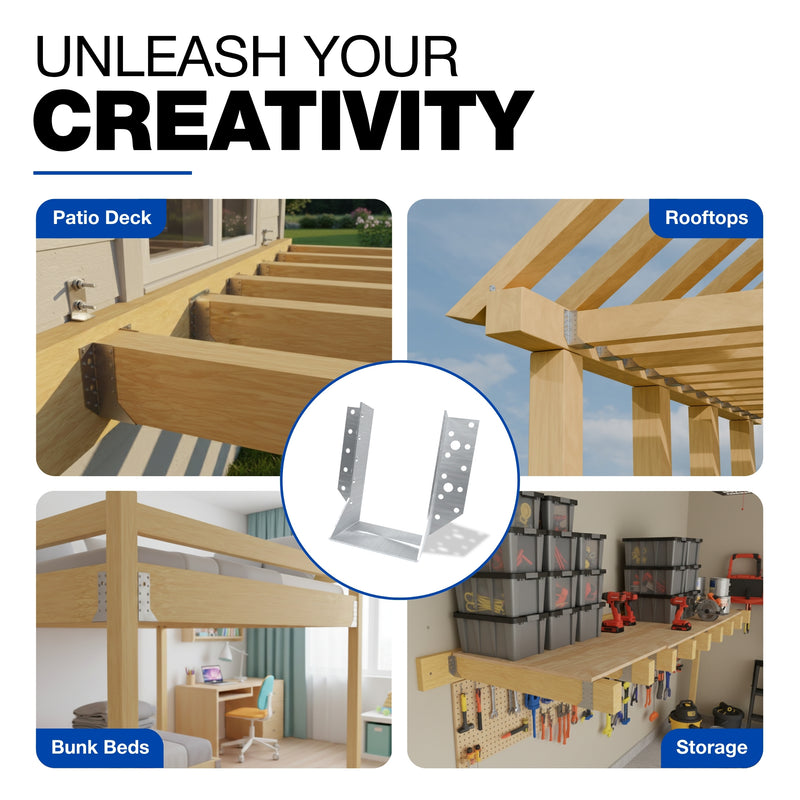
Fence brackets are the small galvanised steel fixings that hold a timber fence together at its joints: panel to post, rail to post, gravel board to post. There are about seven types you'll actually meet in a garden, and each one exists for one specific joint. Work out which joint you're making and how thick the timber going into it is, and choosing between the types of fence brackets takes roughly a minute.
Most of the confusion that reaches our inbox comes down to one habit: people size a bracket by the post. You size it by the panel. That single mix-up sends more parcels back to our Eindhoven warehouse than everything else put together, so it's worth getting straight before you order anything.
The quick answer: match the bracket to the joint
If you already know what you're building, this table will get you to the right part without reading the rest.
| The joint you're making | Bracket you want | Size to order |
|---|---|---|
| Fence panel into a timber post | Fence panel clip (U clip) | Match the panel thickness: 35, 45 or 55 mm |
| Lightweight trellis onto a post or wall | Trellis Z clip | 60 mm |
| Panel that rattles, or keeps getting lifted out | Security or anti-rattle bracket | 100 mm |
| Arris rail into a post (feather-edge fencing) | Arris rail bracket, or the bolt-on type | 300 mm, or 90 x 60 mm bolt-on |
| Gravel board to post | Gravel board clip | 30 or 50 mm |
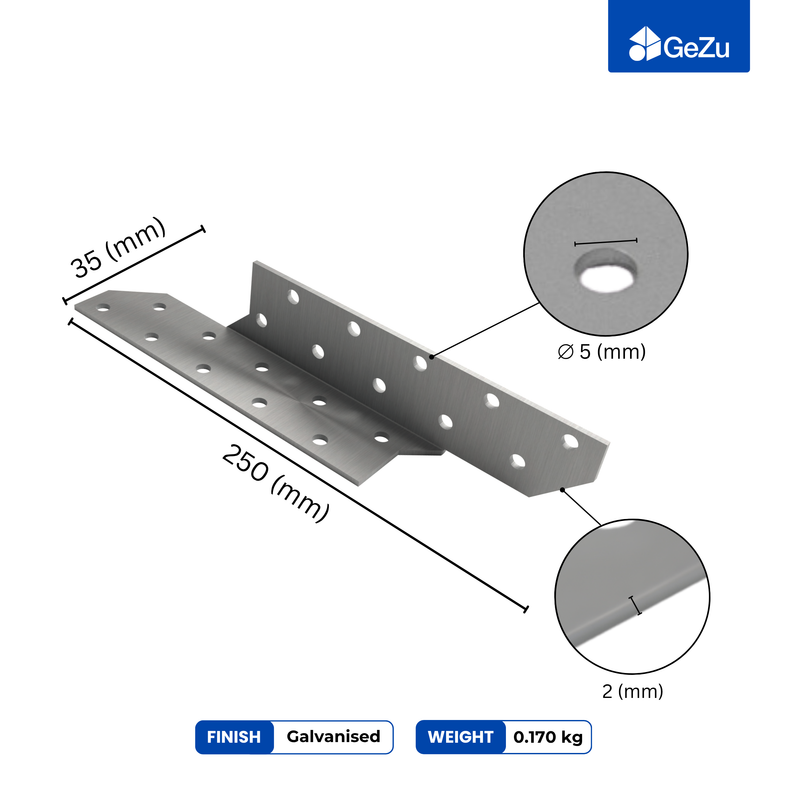
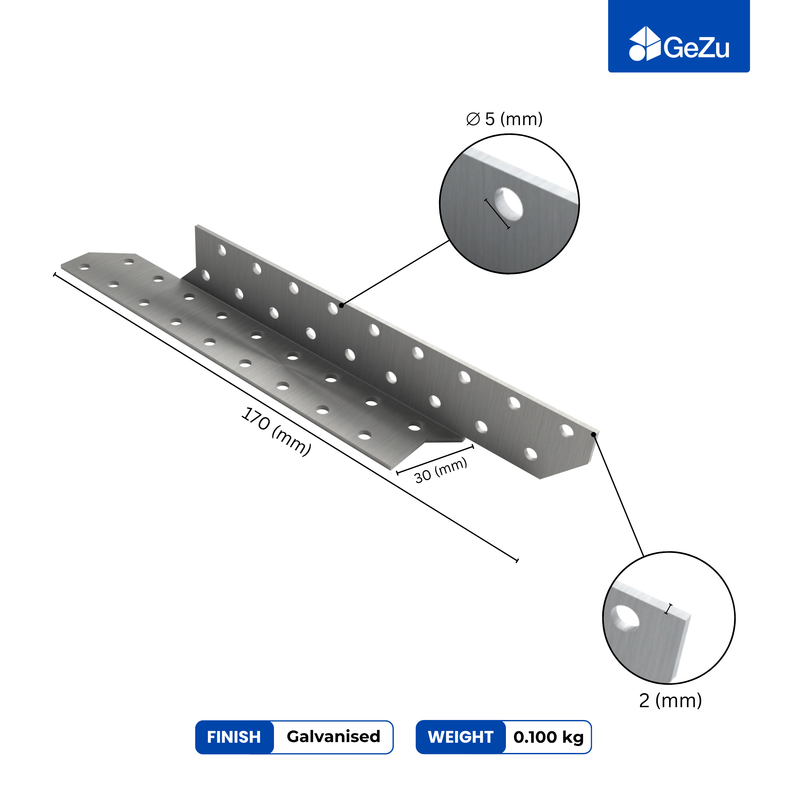
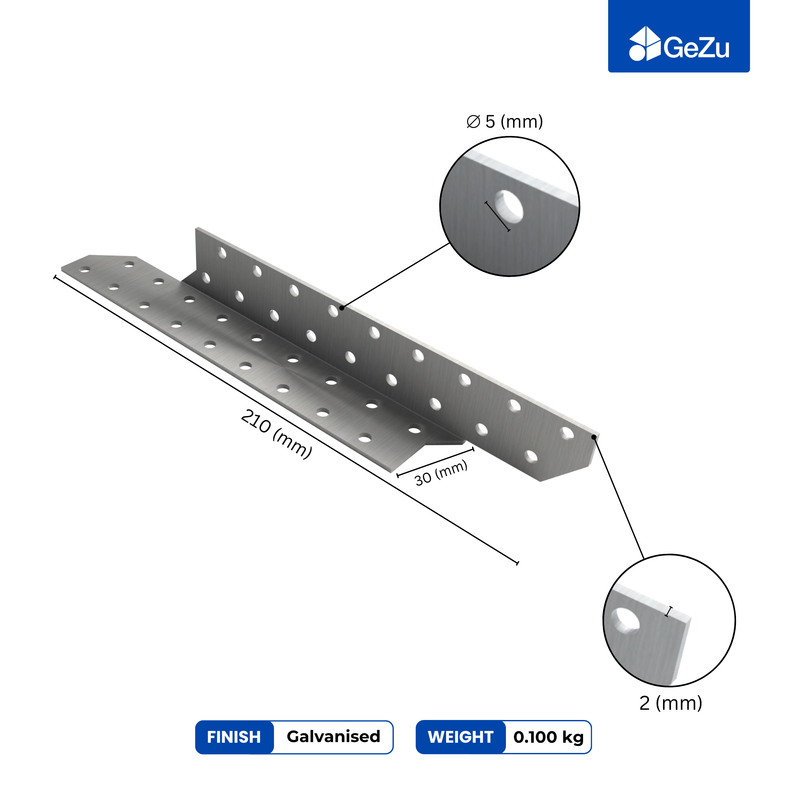
| Knee rail into a birdsmouth post | Birdsmouth post strap | 70, 95 or 250 mm |
| Timber post onto a wall or border block | Post support wall bracket | 71 x 71 or 91 x 91 mm |
1. Fence panel clips, the U-shaped ones

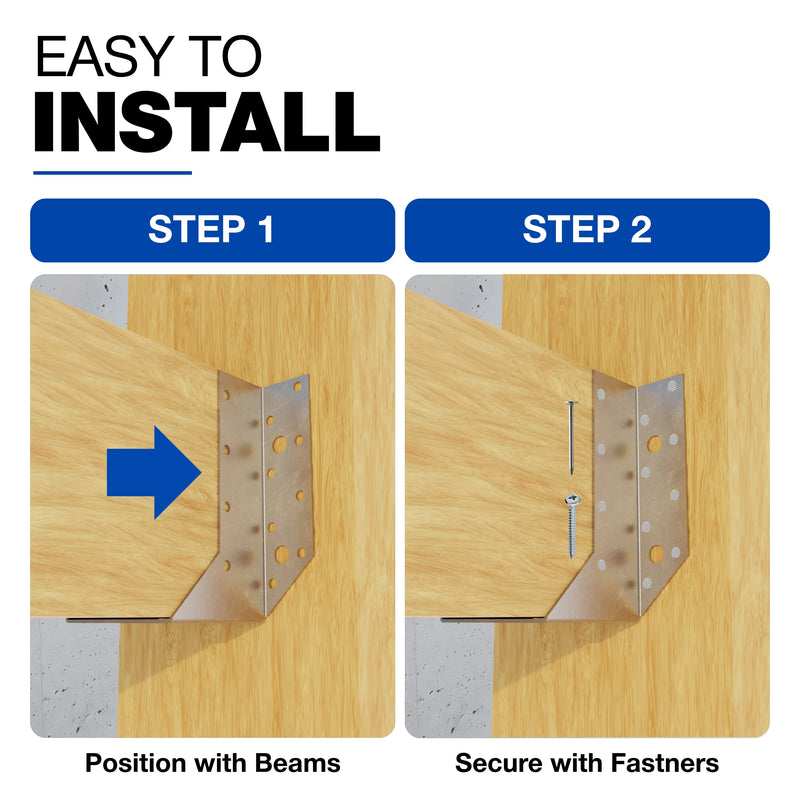
This is the bracket most people mean when they say fence bracket. It's a shallow galvanised U: the panel's edge batten sits inside the U, two screws go through the back of the clip into the post, two more go sideways into the panel. Three clips down each side of a standard panel is normal, and on a tall or exposed fence we'd use four.
Here's the part that matters. The number on the clip is the panel thickness, not the post width. A 35 mm clip takes a 35 mm frame. It will not stretch over a 45 mm one. Go and measure the edge batten of your panel with a tape before you order, because panels described by the same name vary between suppliers.
As a rough guide: 35 mm suits trellis and lattice, 45 mm covers most lap and European panels, and 55 mm takes the heavier paling and closeboard frames. Our fence panel clips come in all three, at under a euro each.
Should you use clips at all? Honestly, no, not always. Plenty of perfectly good fences are built by driving a long screw straight through the panel frame into the post, and it's quicker and costs nothing. The trade-offs are real though: that edge batten is thin and it splits, the screw head sits in end grain where water collects, and when one panel blows out in a gale you can't lift it free without dismantling its neighbours. Clips let a single panel drop out in about thirty seconds. On a fence you expect to maintain, that's worth the euro.
2. Trellis Z clips

A Z clip does the same job as a U clip but with its two leaves offset instead of facing each other. That offset lets you fix a thin trellis panel flat against the face of a post or a wall rather than slotting it between two posts. It's the right choice for topper trellis above a solid panel, and for anything going onto brickwork. Ours is 60 mm across.
3. Security and anti-rattle brackets

Longer than a standard clip, at 100 mm, and it's there for two problems that turn out to be the same problem. Panels that sit loose in their gap knock against the post every time the wind gets up, which is maddening at three in the morning. The same slack is what lets someone lift a panel out of a slotted post and walk into your garden. A security bracket pins the panel down at top and bottom so it can't move in either direction.
4. Arris rail brackets

Feather-edge fencing is built on arris rails, the timber with a triangular cross-section that runs horizontally between posts. The sloped top face is not decoration, it sheds rainwater away from the boards nailed to it.
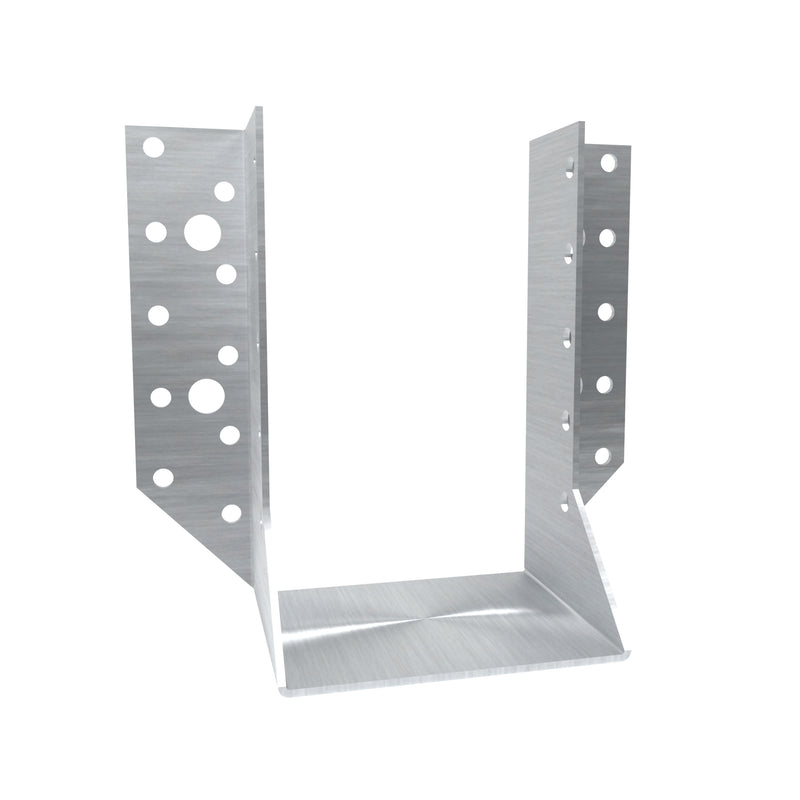
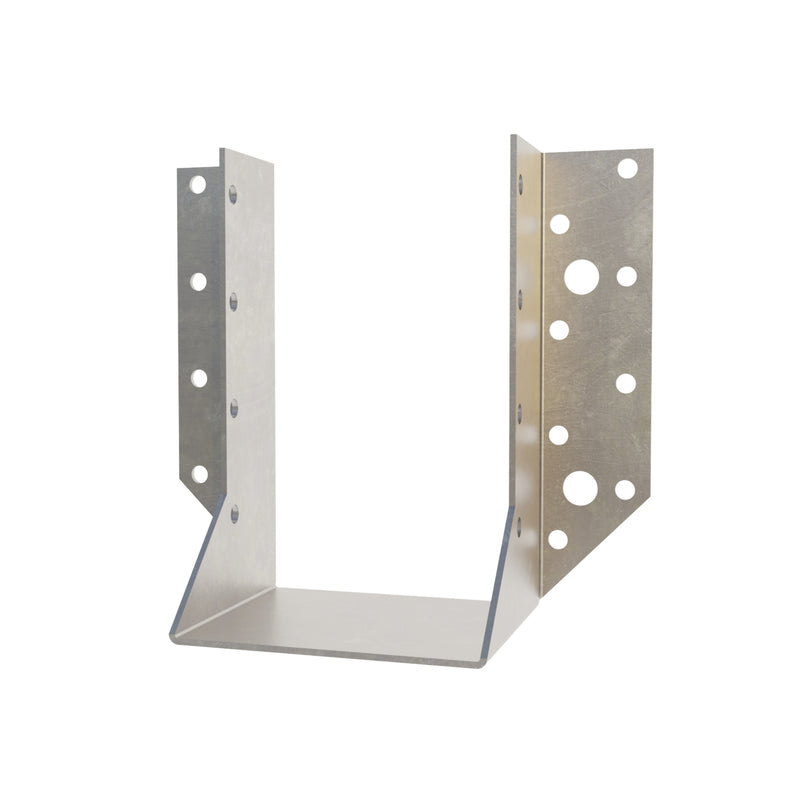
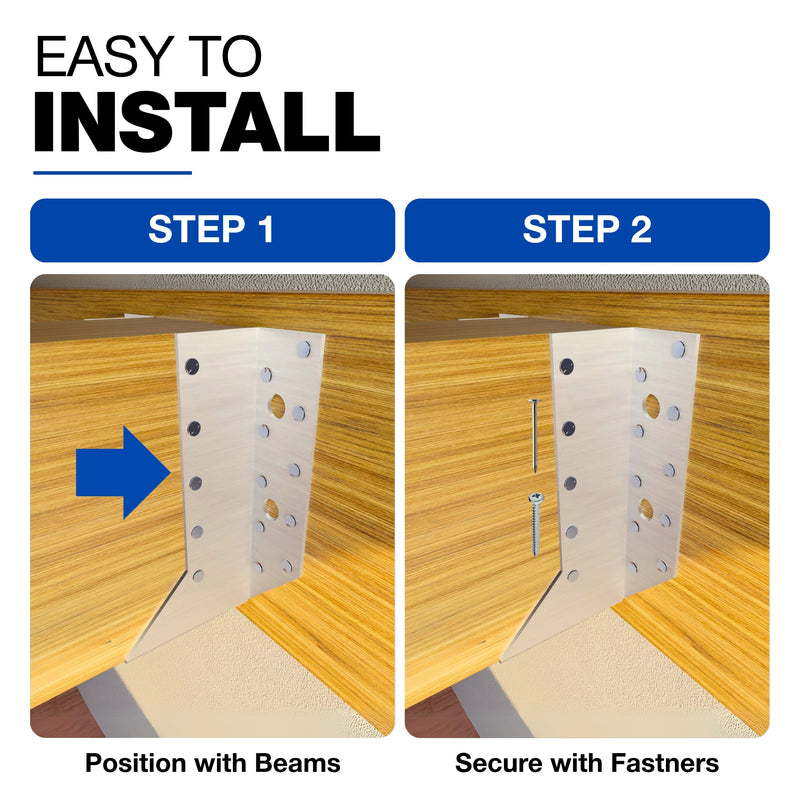
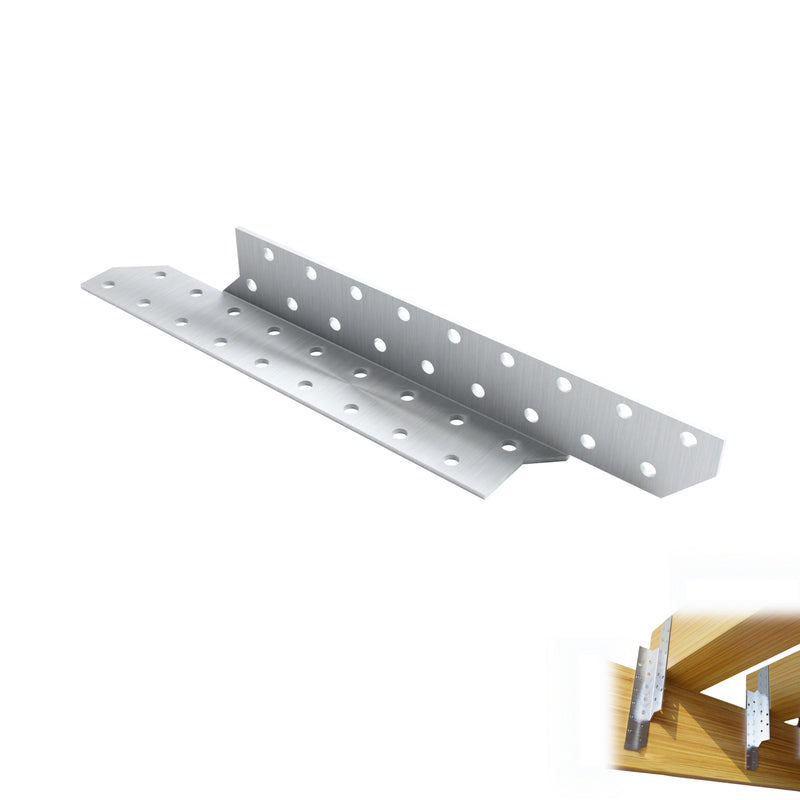
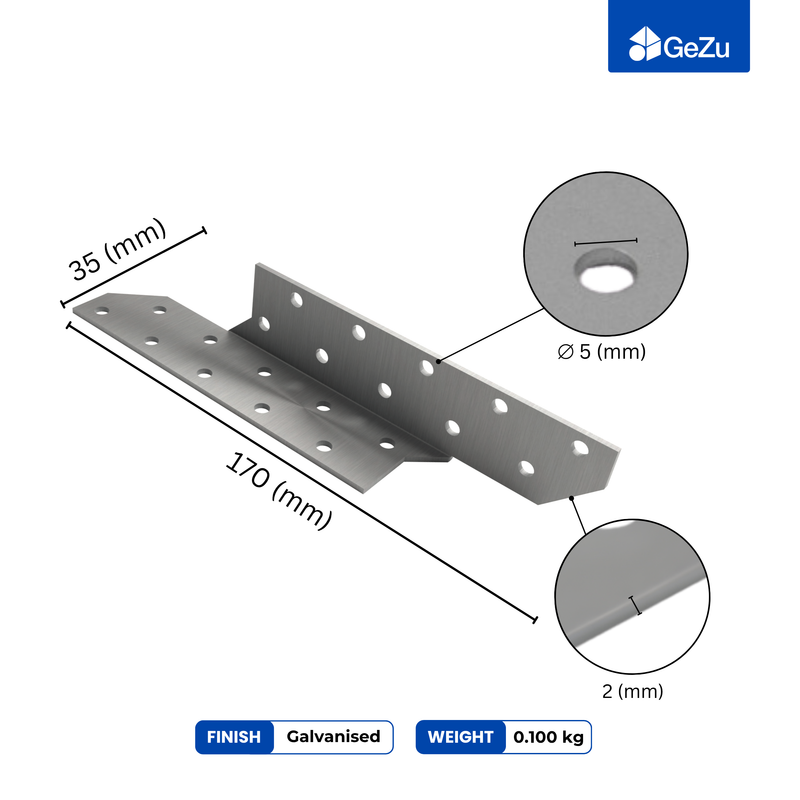
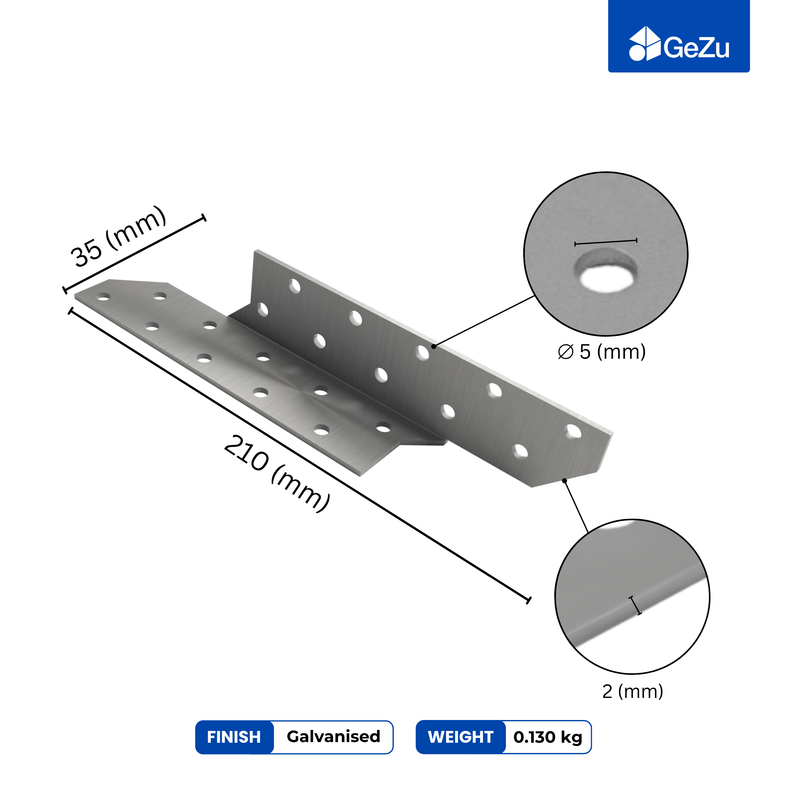
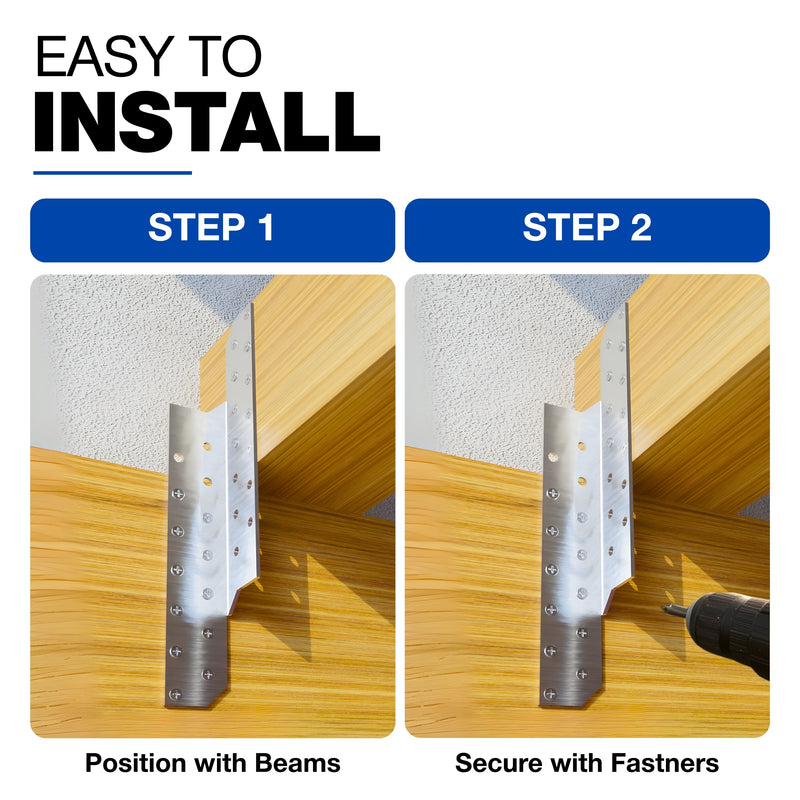
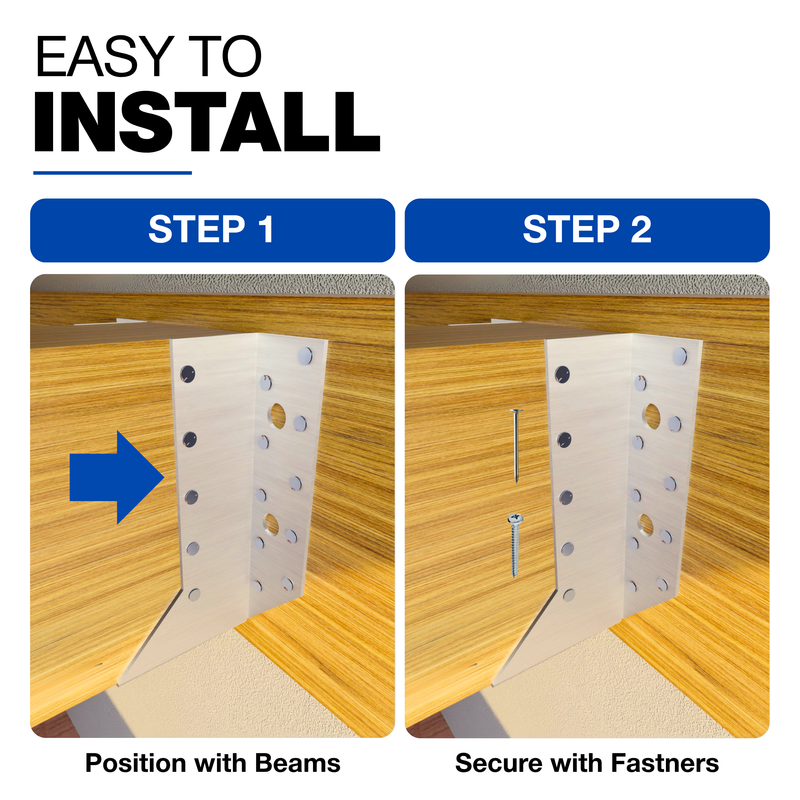
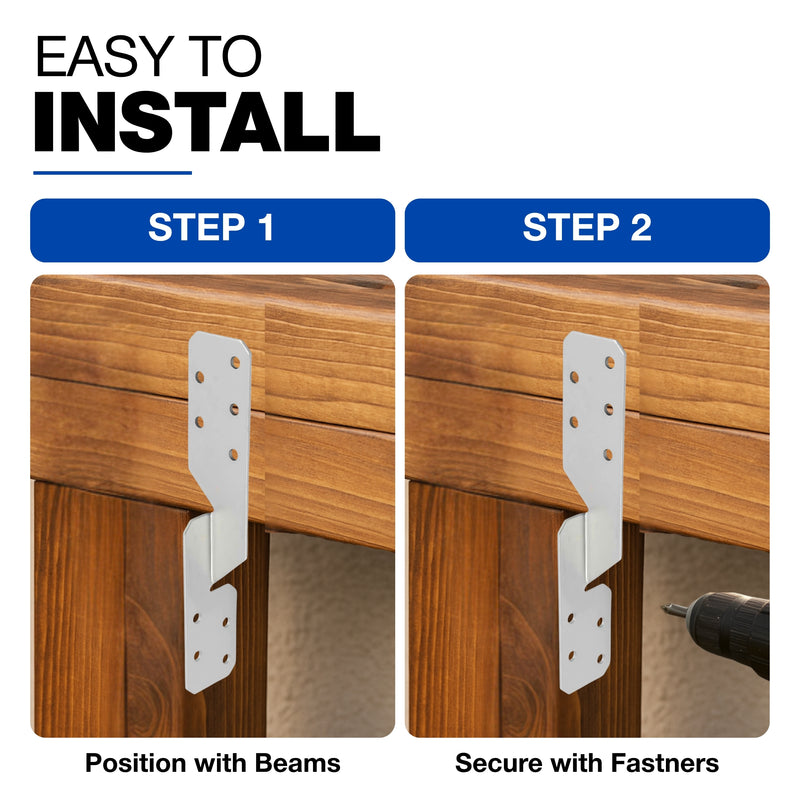
Traditionally the rail is cut to a point and driven into a mortice slot chopped in the post. It's a strong joint and a slow one, and it's unforgiving if your post spacing is even slightly out. An arris rail bracket wraps the rail instead and screws to the face of the post, which means no chopping and no exact spacing. Our 300 mm arris rail bracket is the long pattern, shaped to the triangle and pre-drilled, and it works for new fences and for splinting a rail that's rotted through at the post.

The bolt-on version is a shorter 90 x 60 mm shoe. Its advantage is that you can slide the rail up or down the post before you commit a single screw, so getting a run of rails level is much easier than with a mortice. If you're building rather than repairing, start here.
5. Gravel board clips

A gravel board is the plank that runs along the bottom of the fence, sitting between the soil and the panel. It's a sacrificial part. Soil holds water against timber, timber that stays wet rots, and it's always the bottom edge that goes first. Replacing a gravel board every eight years or so is a cheap afternoon; replacing panels is not.
The clips are small, 30 or 50 mm depending on board thickness, and they hold the board to the post so it can be swapped without touching anything above it. If the bottom of your fence is the bit that keeps failing, our guide on protecting fence posts from rot covers what else is going on down there. Gravel board clips are the easy half of the fix.
6. Birdsmouth straps for knee rail fencing

Knee rail fencing is the low post-and-rail you see edging car parks and woodland paths, usually about knee height. The rail is notched into a curved birdsmouth cut in the post, and the strap wraps over that notch to stop the rail pulling out as the timber shrinks.
We stock three. The 3-bend strap, in 70 and 95 mm, is the everyday one for a rail meeting a post mid-run.

The 5-bend strap at 95 mm has more folds, so it grips further round the joint. It's made for top rails, where the leverage is worst.

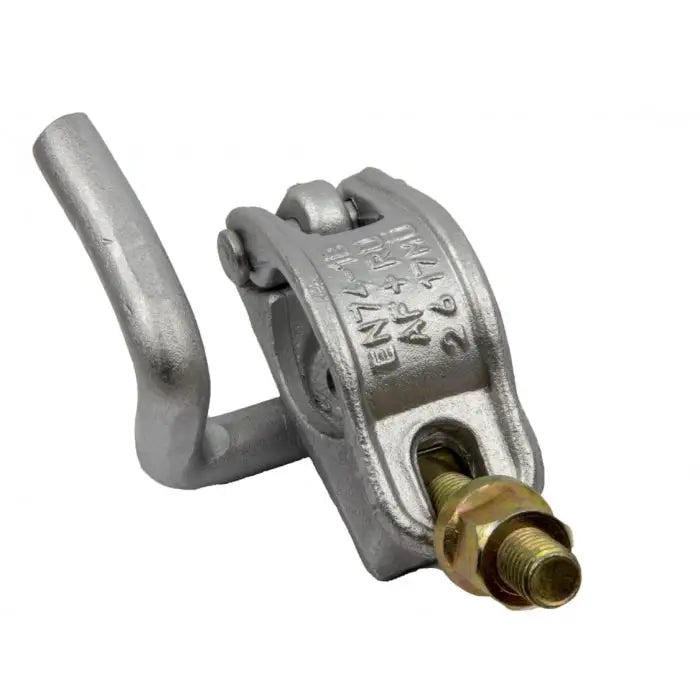
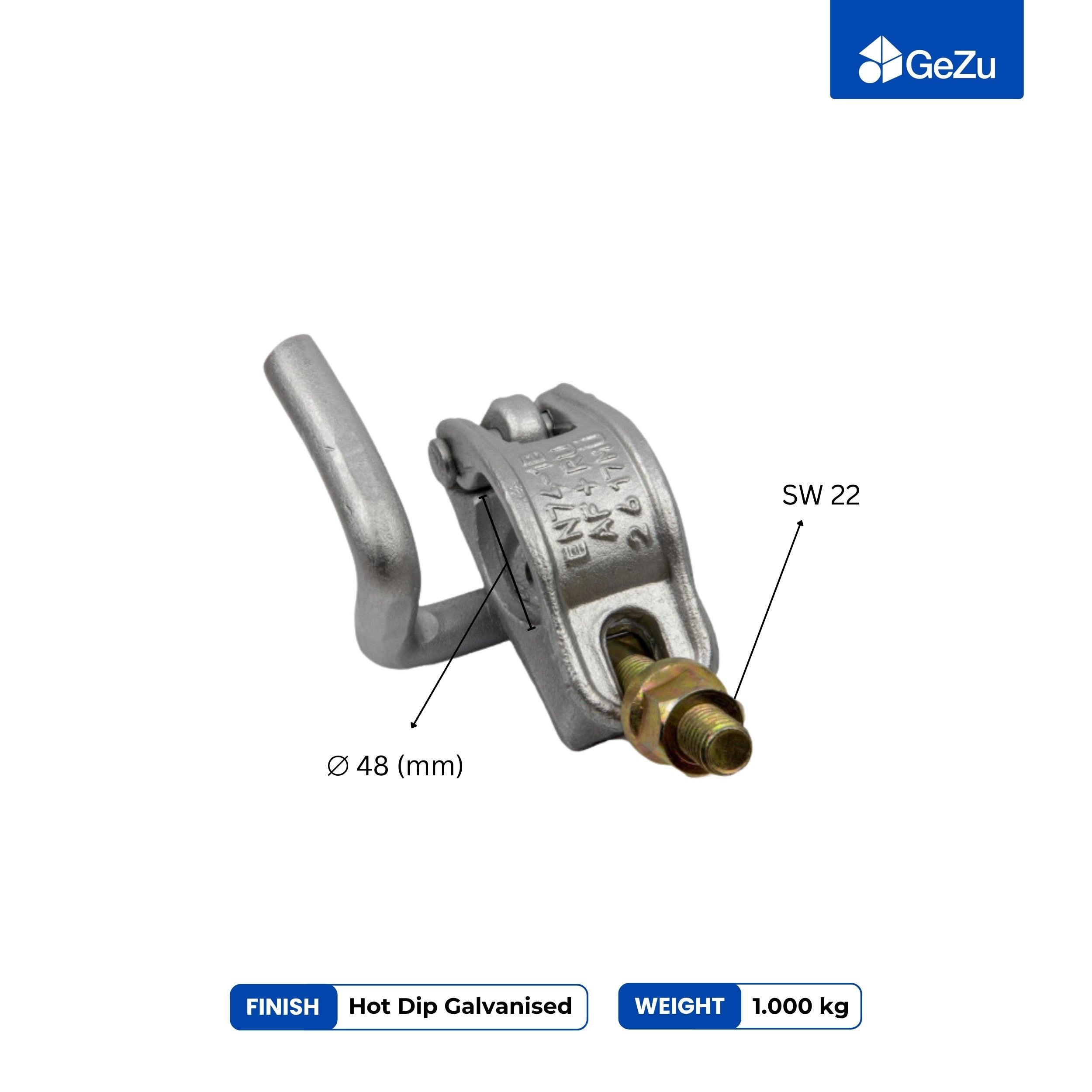
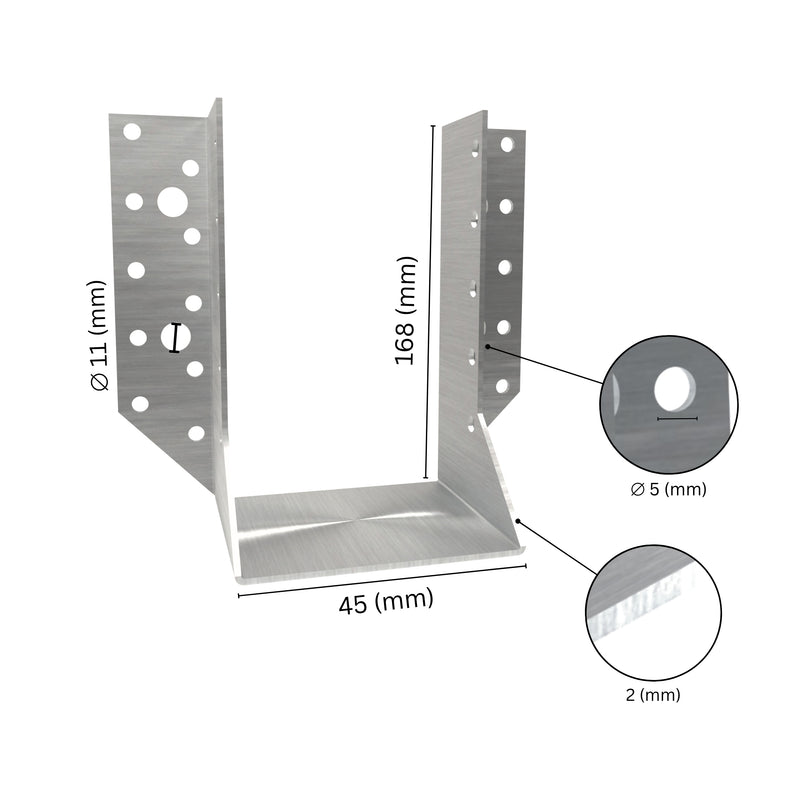
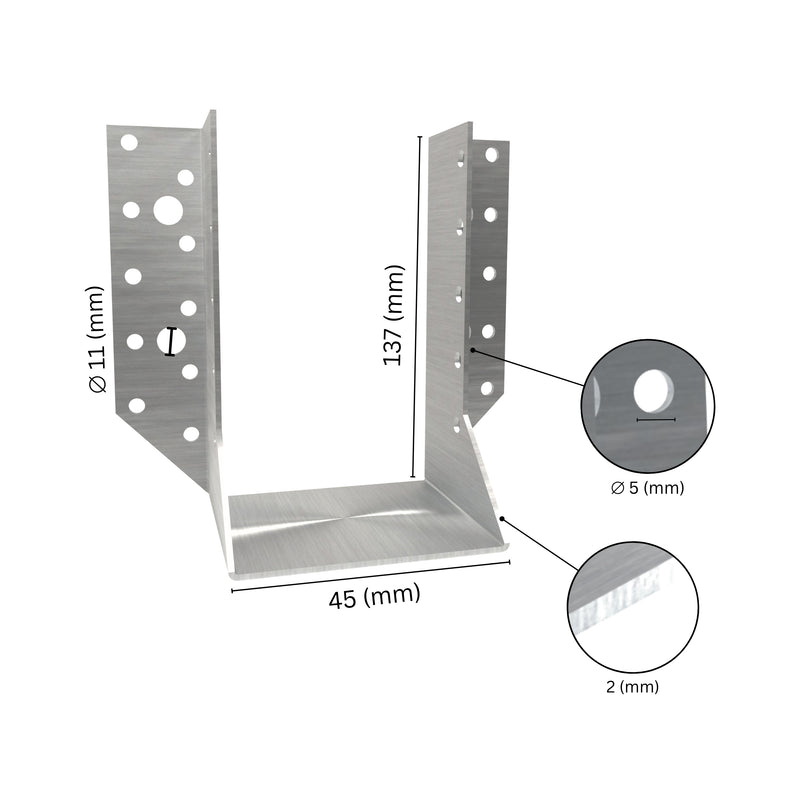
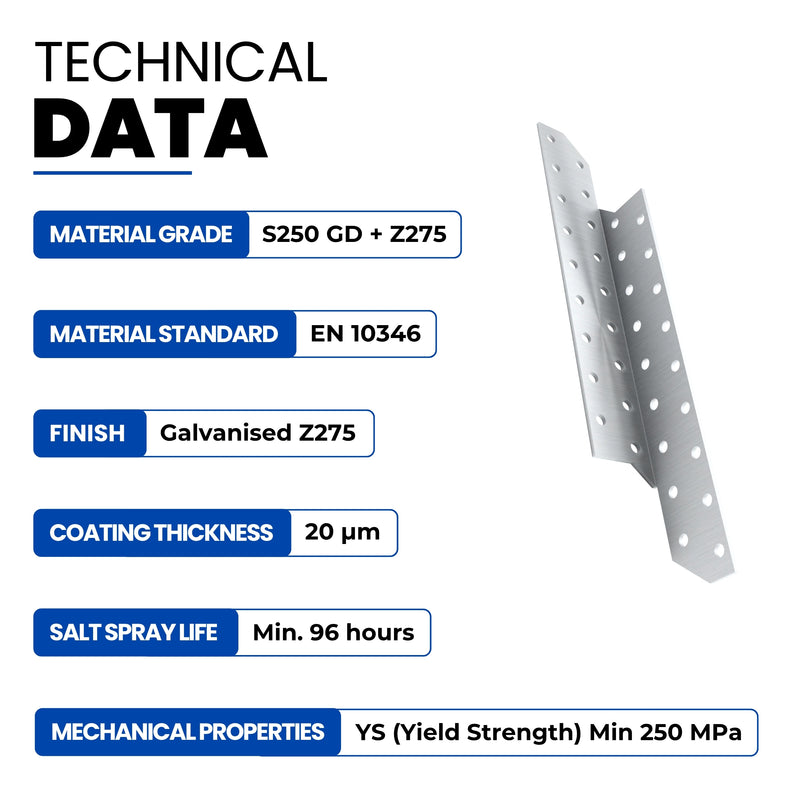
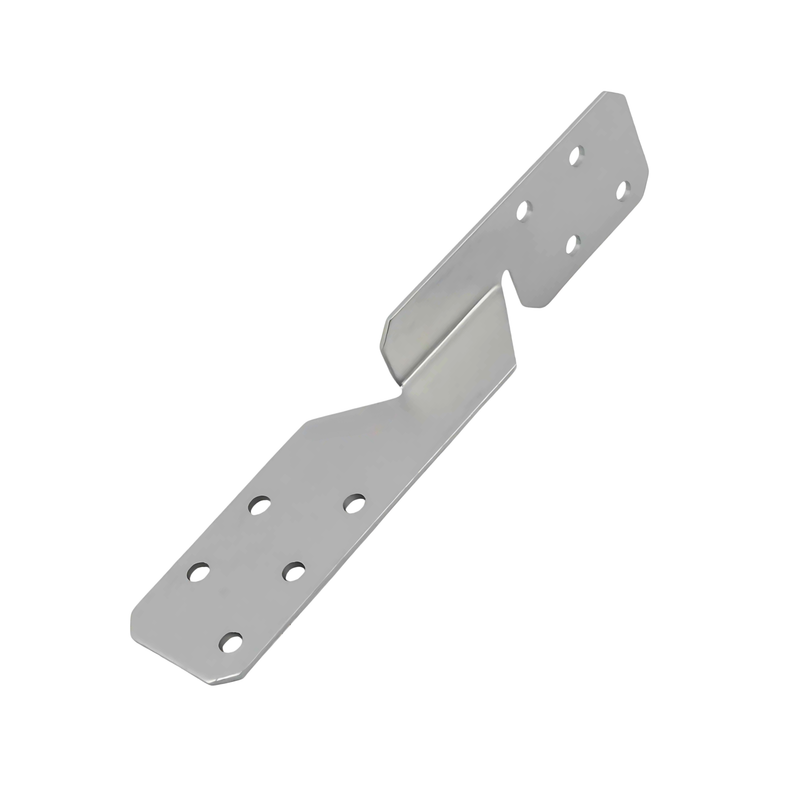
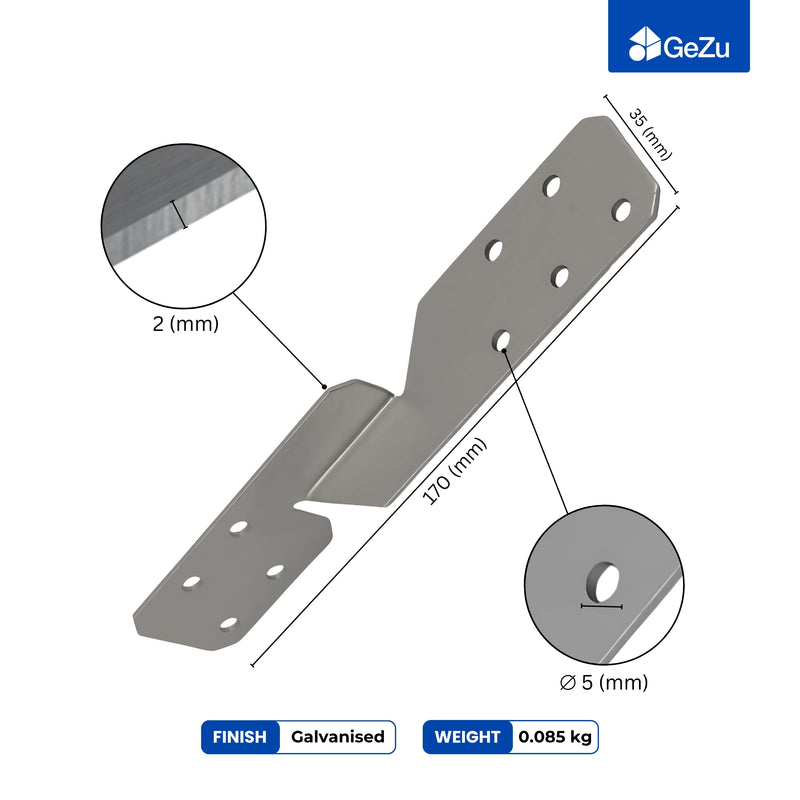
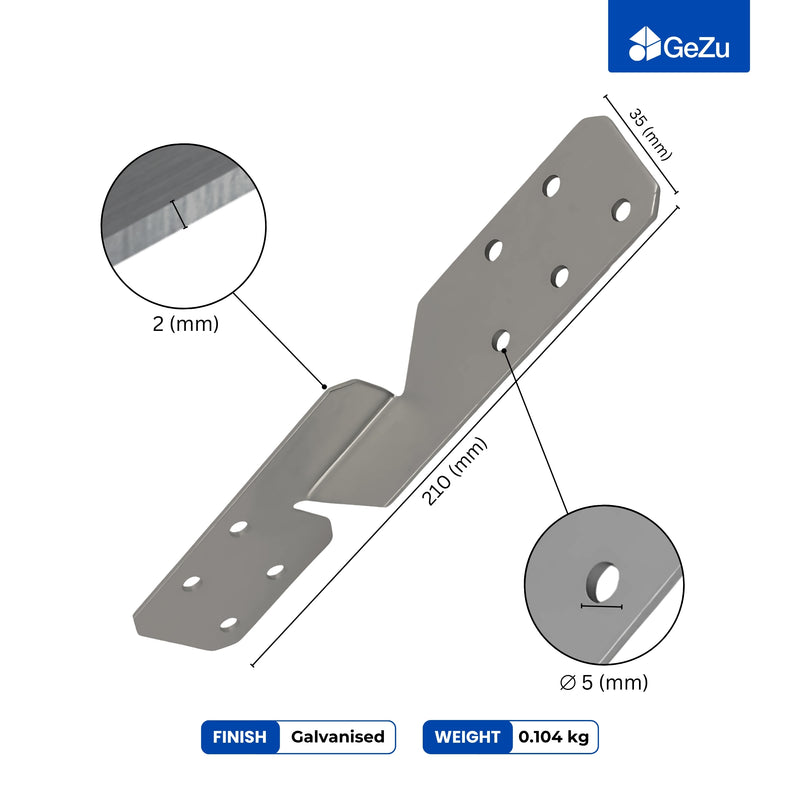
And the long 250 mm knee rail strap is a different shape again, a single L-bent plate that runs along the rail and turns down the post, spanning the whole intersection on a fence that's going to get leaned on and climbed over.
7. Wall brackets, for when the post can't go in the ground

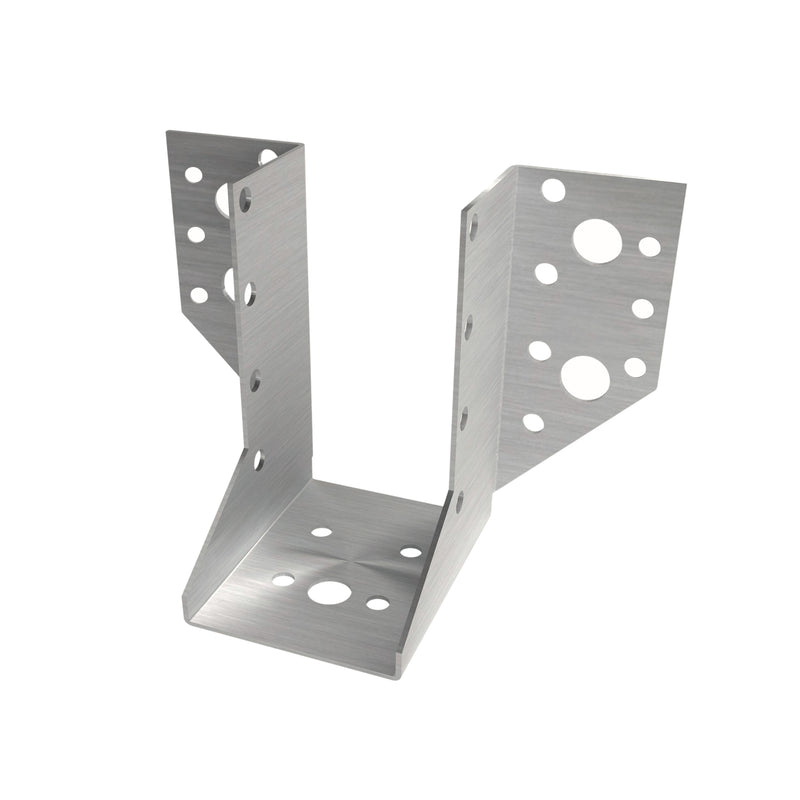
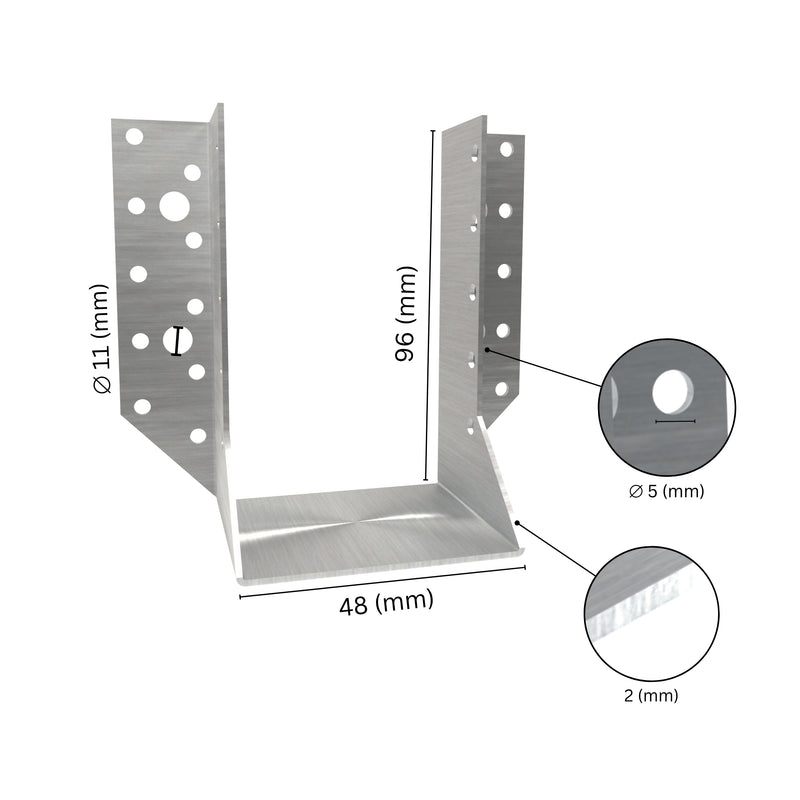
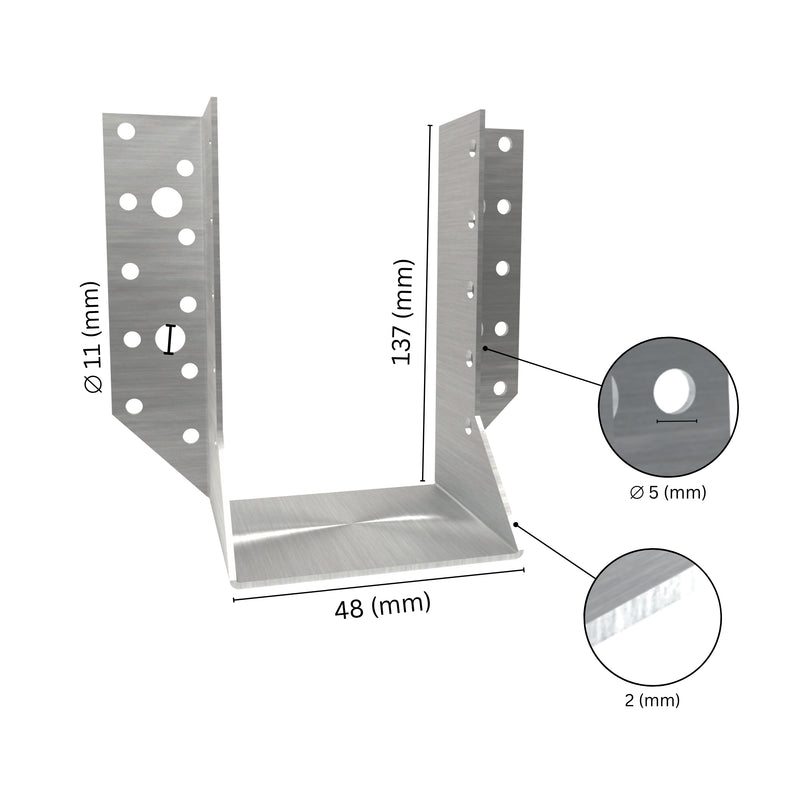
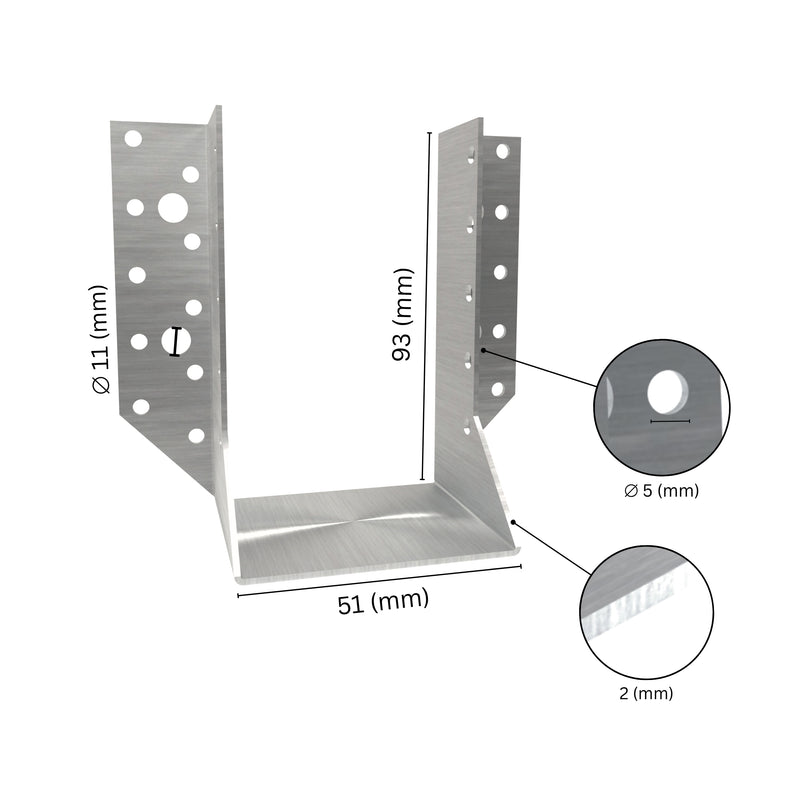
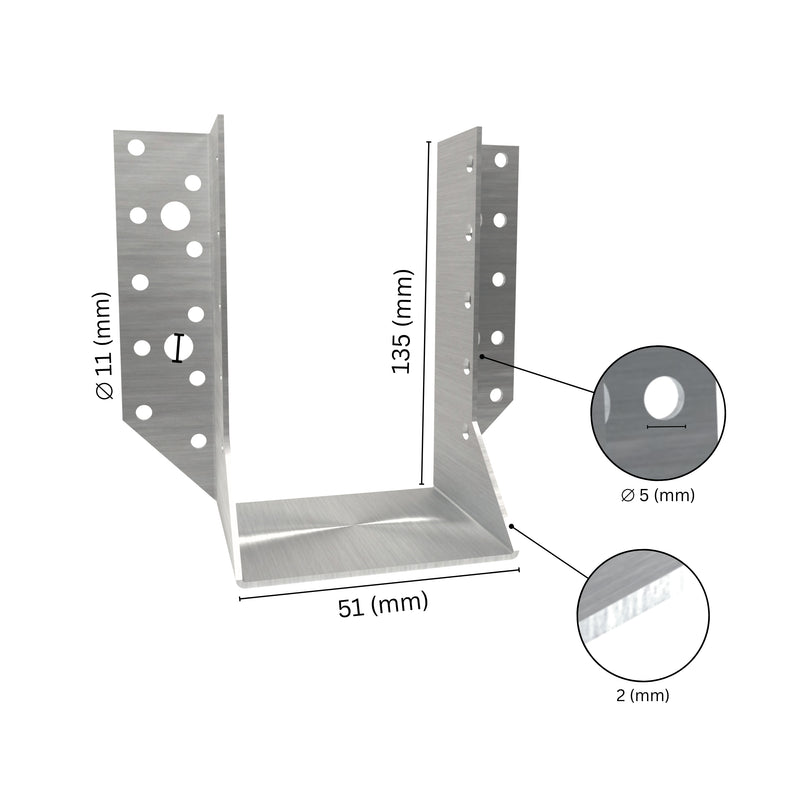
Sometimes there's nowhere to dig. A raised bed, a low retaining wall, an L-shaped border block, a concrete surround you don't want to break up. A post support wall bracket bolts to that solid face and holds a square post in a 150 mm deep shoe, in 71 x 71 and 91 x 91 mm to suit the two common post sizes. Ours are hot-dip galvanised, which is what you want for a part that will sit in standing water after every downpour.
Do check what you're fixing into first. A single skin of decorative walling block is not a foundation, and a fence post is a long lever. If you can dig, dig; our piece on how deep a fence post should be set explains why a buried post beats a surface-fixed one nearly every time.
What about concrete posts?
Worth saying plainly, because we get asked weekly: none of the brackets above are meant for concrete posts.
If your concrete posts are the slotted kind, with a channel down each face, you need no bracket at all. The panel slides down into the slot and gravity does the rest. If they're flat-faced, there are clips made specifically for concrete that fix with masonry screws or bolts through the post. We don't stock those, and a timber clip with wood screws will not hold in concrete. Buy the concrete-specific part from a fencing merchant rather than making a timber one work.
Galvanising, and the screws everyone forgets
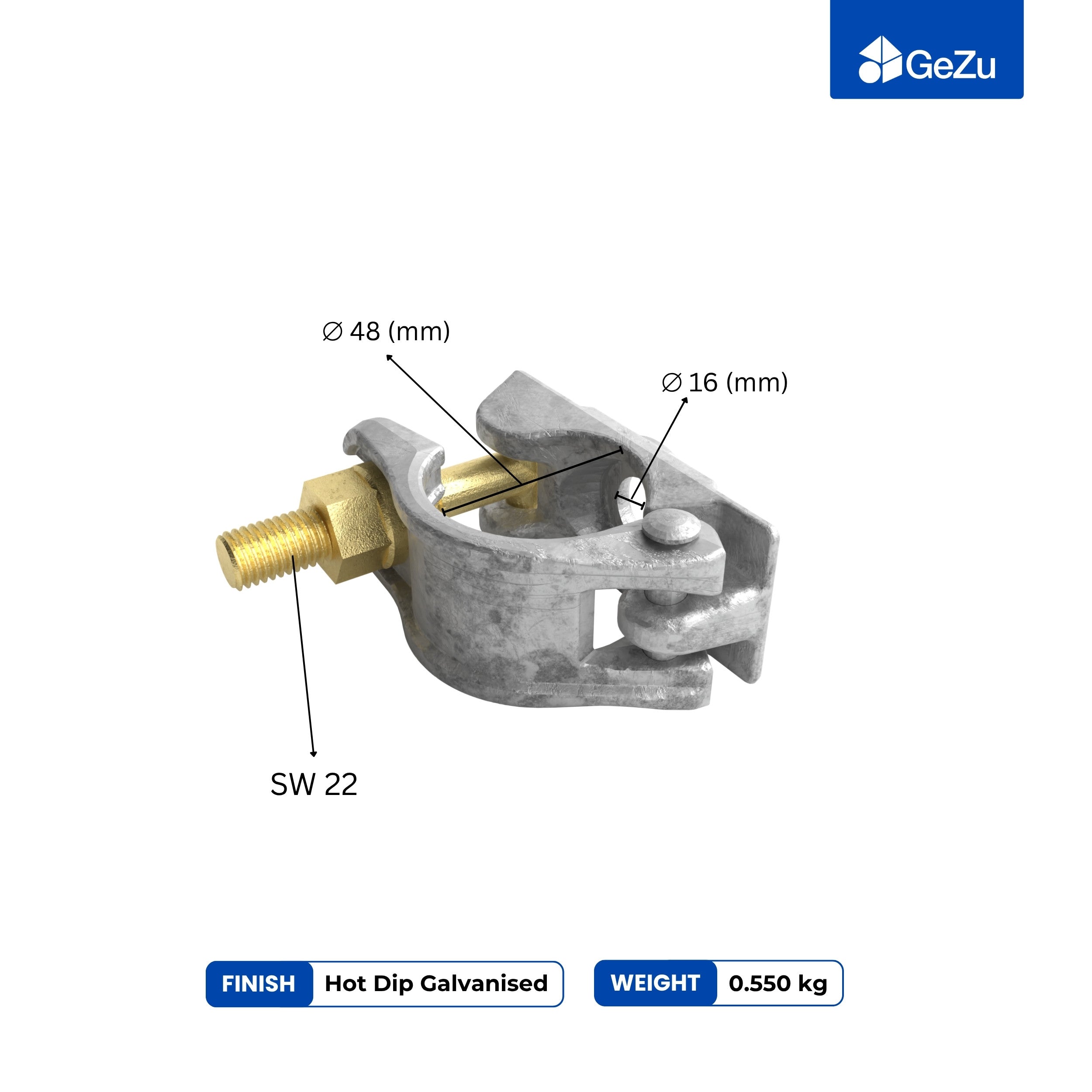
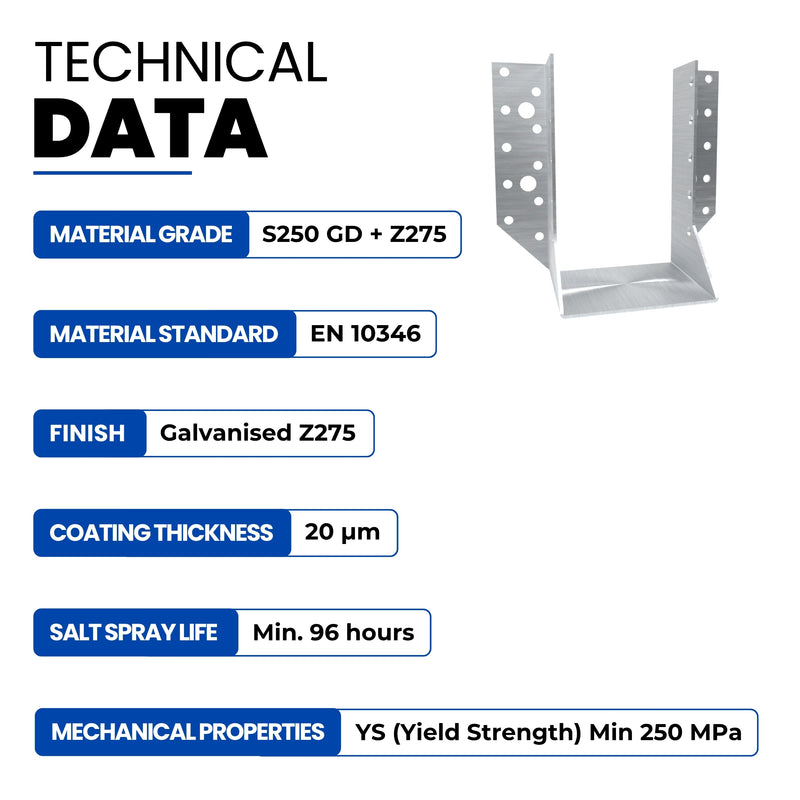
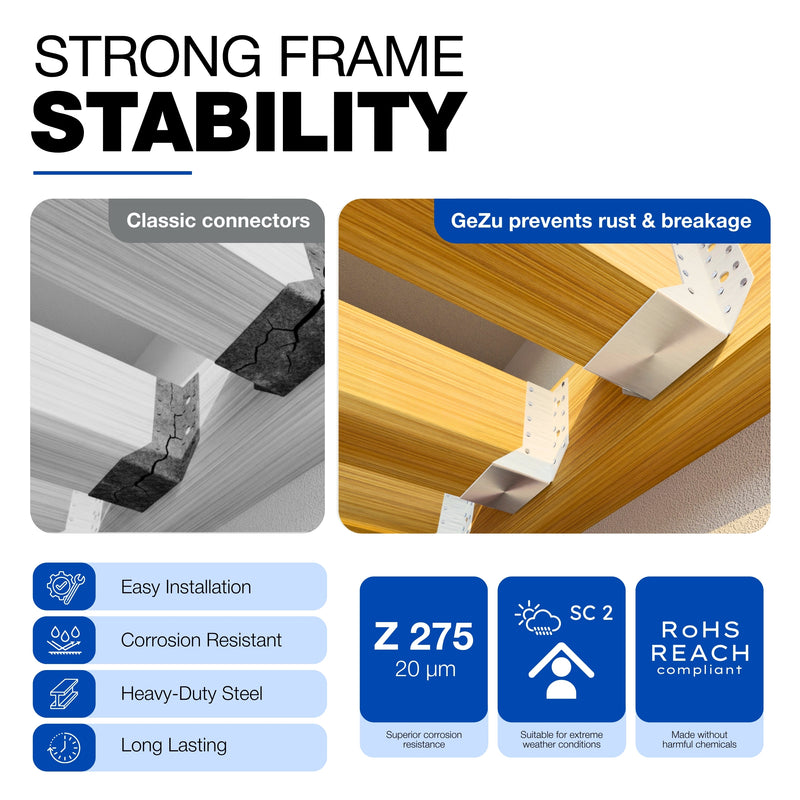
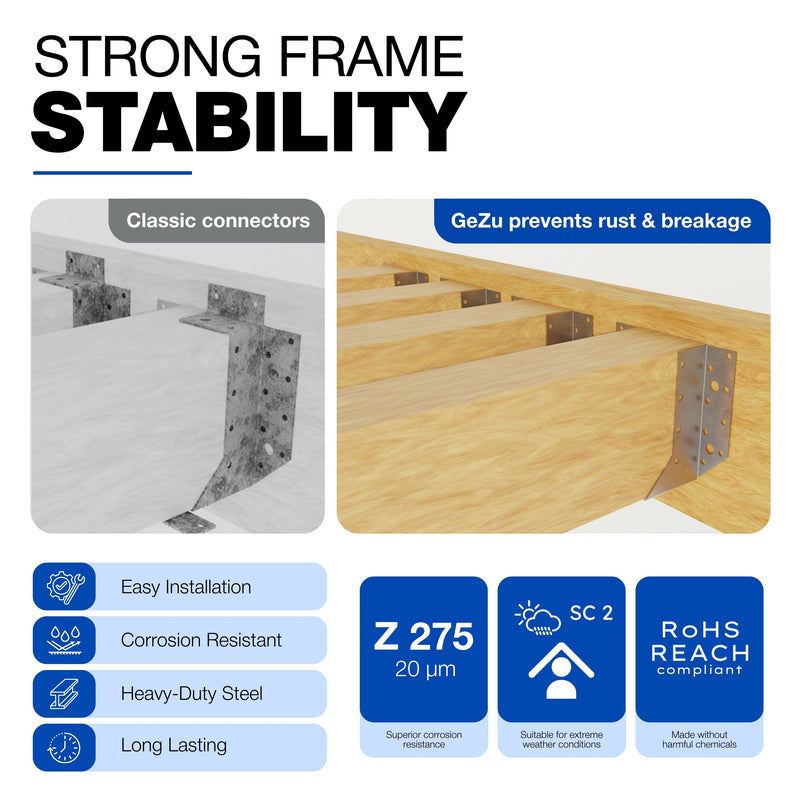
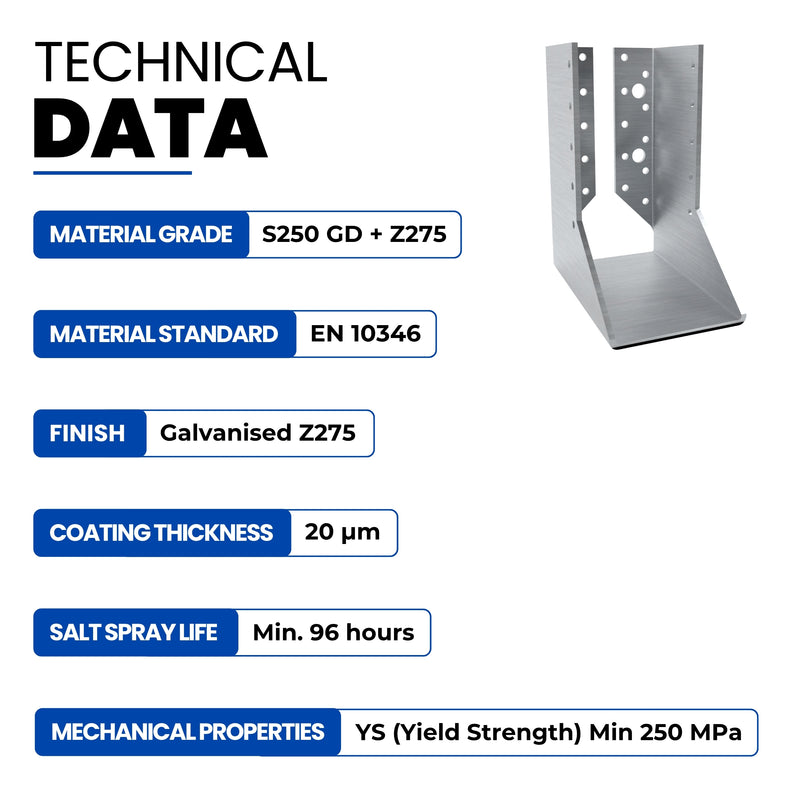
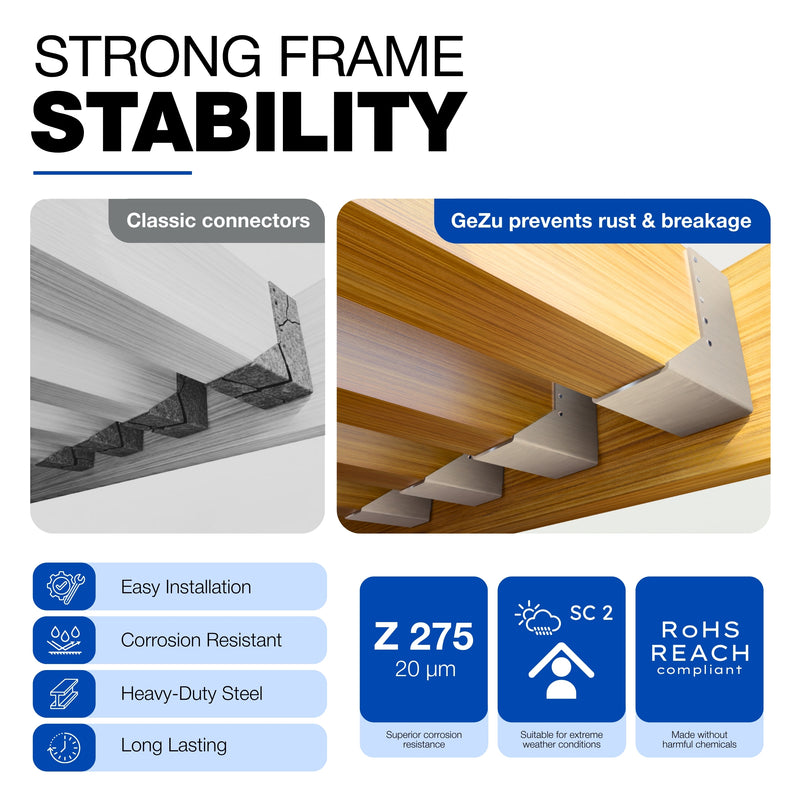
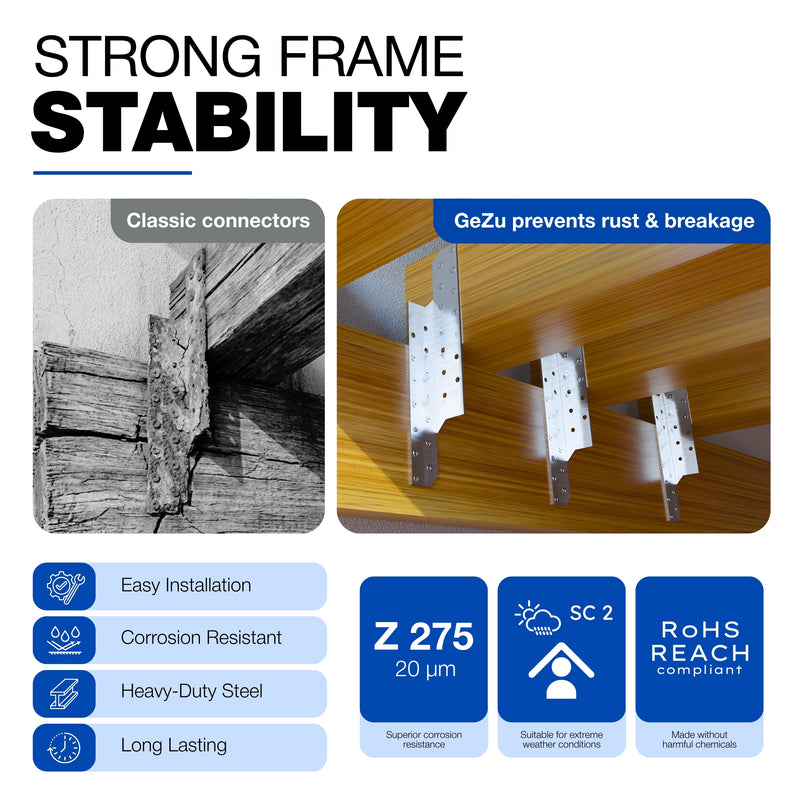
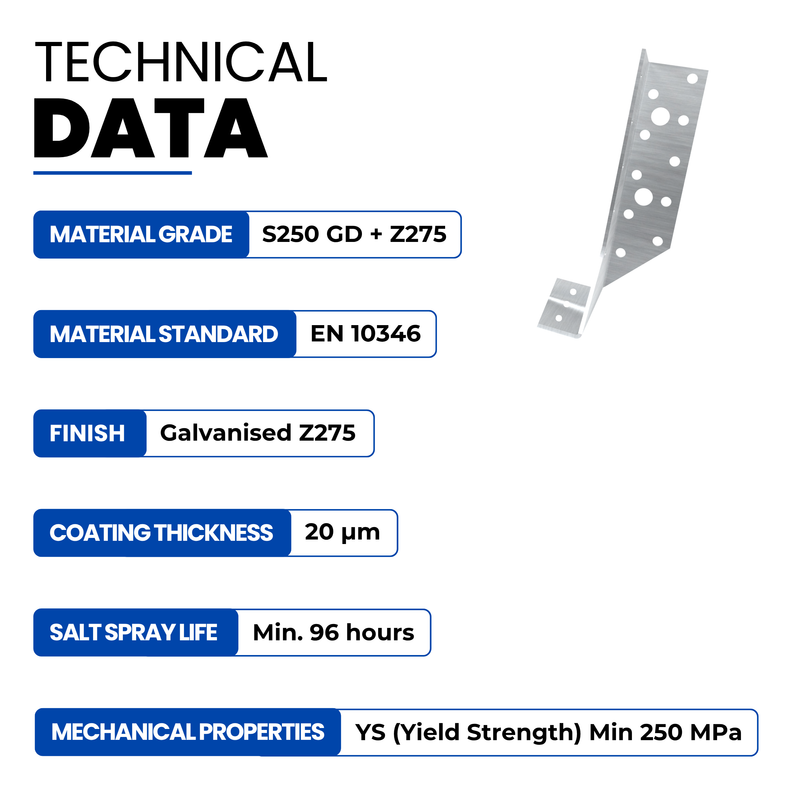
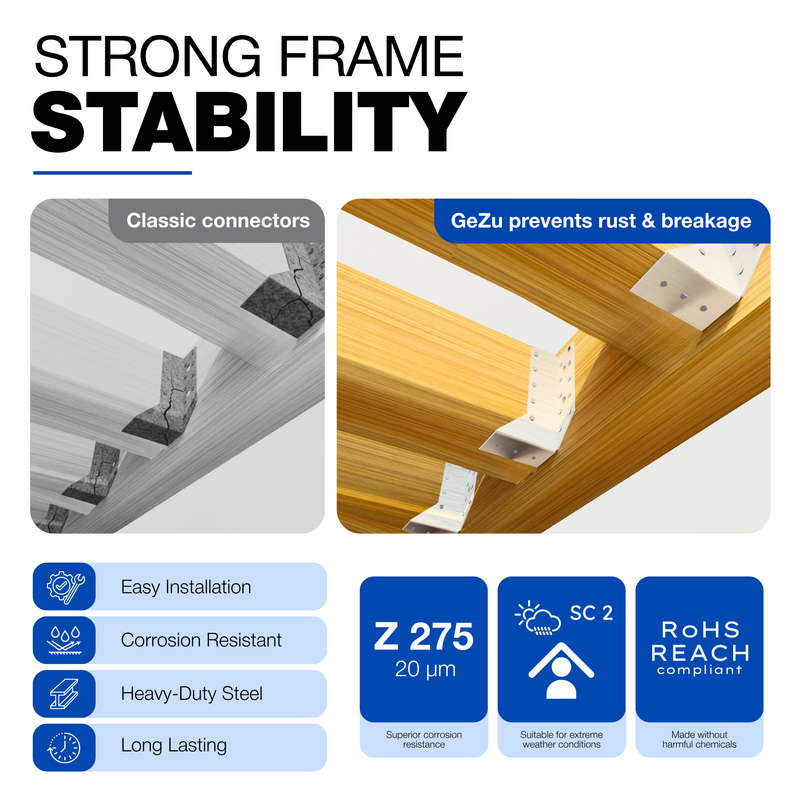
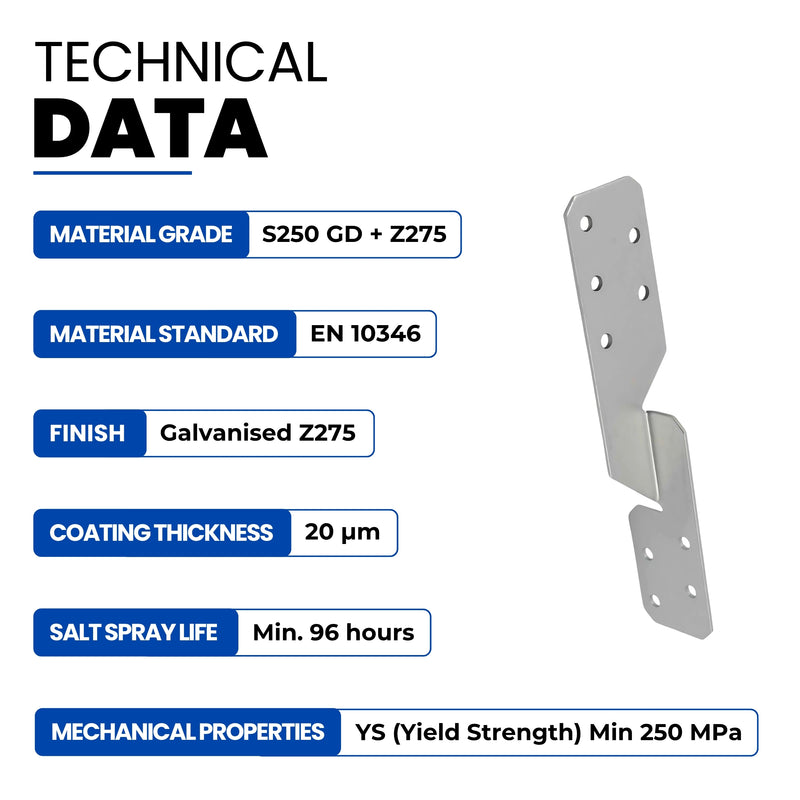
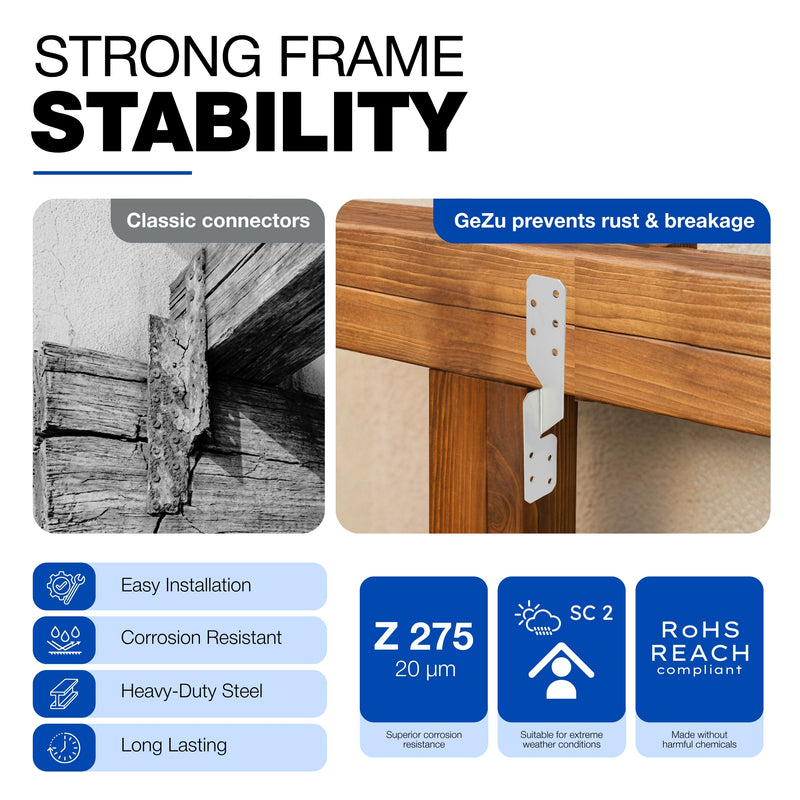
Fence brackets are sold galvanised because they live outdoors in wet soil splash. Not all galvanising is equal though, and the difference between a hot-dip coating and a thin electroplated one shows up after a few winters. We wrote about how sellers use the word galvanised if you want the detail.
The commoner mistake is the screws. A galvanised bracket fixed with bright zinc indoor screws will bleed rust down your fence inside one season, and the screw heads will be the first thing to fail. Use outdoor-grade screws, typically 4.0 x 35 mm for panel clips. Within a few hundred metres of the sea, go stainless for both. If you're also joining timber to timber elsewhere in the build, our guide to angle bracket types and sizes covers the flat L and T plates that do that job.
FAQs
What size fence panel clips do I need?
Measure the thickness of your panel's edge frame and buy that size. 35 mm is usual for trellis, 45 mm for lap and European panels, 55 mm for heavier paling. The post width makes no difference to the clip size.
How many clips per fence panel?
Three per side on a standard panel, spaced roughly evenly, and four per side on anything over 1.8 m or in an exposed spot.
Can I screw a fence panel straight to the post instead?
You can, and many people do. You'll risk splitting the thin edge batten, and you won't be able to lift out a single damaged panel later without disturbing the ones either side.
Are fence brackets strong enough on their own?
For holding a panel in place against wind, yes, that's exactly what they're designed for. They are not structural connectors and we don't publish load ratings for them, because the number that matters is what your posts and their foundations can take, not the bracket.
Picking yours
Start from the joint, check the timber thickness with a tape, and buy the bracket that matches. Everything in this guide sits in one place in our fence brackets collection if you want to compare sizes side by side.